
AKG studio classic microphones — Comparison of the AKG C214, C314, & C414 XLS
· Audio · Microphones · 17:56
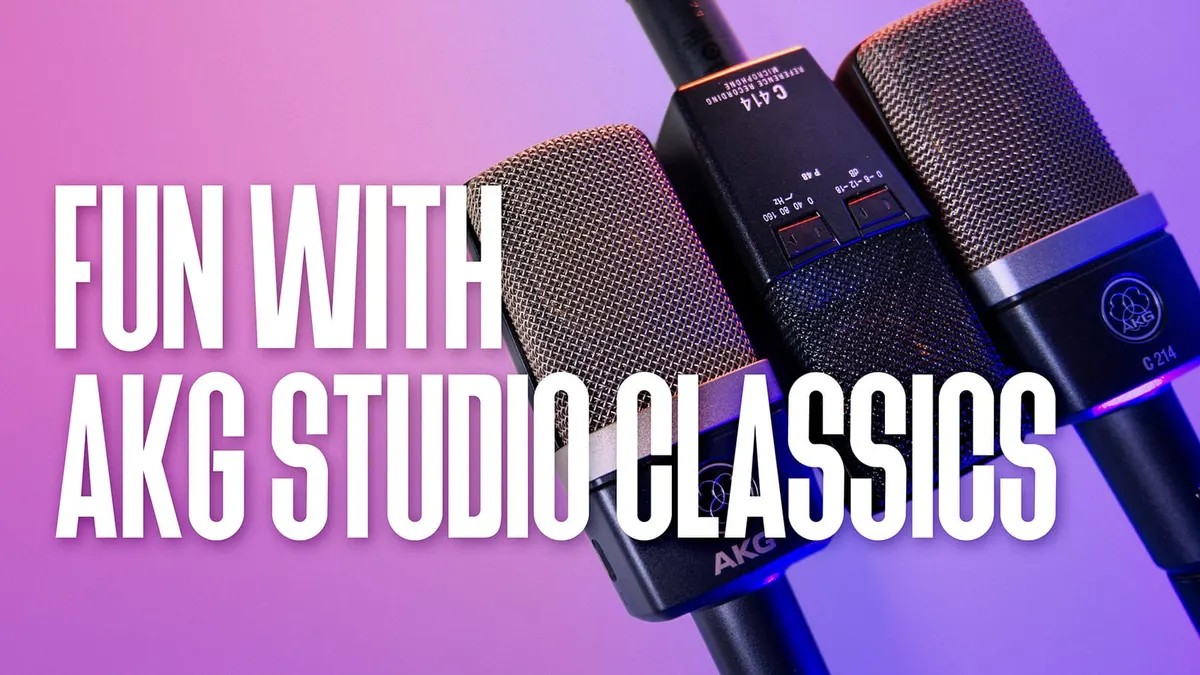
In this week’s episode, we take a look at and listen to the AKG C214, C314, and C414 XLS large diaphragm condenser microphones. These variations on AKG’s studio classic include similar feature sets for recording spoken word audio like podcasts, voice over, and livestreams. The AKG series of microphones include switchable polar patterns and inbuilt low-cut filters and pads. Although they’re often found recording vocals and instruments for music, the C series of mics can also be useful for podcast and voiceover recording. In this video we compare and contrast each mic’s feature set, discuss the applications in which they might perform best, and overall have a fun time playing with different mics. Let’s take a closer look!
Gear used or mentioned
The links below are Amazon, B&H Photo, Sweetwater, or other affiliate links. As an affiliate, I earn from qualifying purchases.
- AKG C214 Large Diaphragm Condenser Microphone, brightest, crispest of the three — B&H, Sweetwater, Amazon
- AKG C314 Large Diaphragm Condenser Microphone, best option for sibilant voices — B&H, Sweetwater, Amazon
- AKG C414 XLS Large Diaphragm Condenser Microphone — B&H, Sweetwater, Amazon
- AKG C414 XLII, brighter, crisper voicing than XLS — B&H, Sweetwater, Amazon
Read the transcript
[Music] foreign [Music] about five years ago I bought the AKG c414 XLS as a voiceover microphone and in today’s video AKG was kind enough to send over two other microphones in the same line the 214 and the 314. now let me explain how I ended up with this microphone and why I use it for voice over I remember um seven years ago or so my brother who is a musician had been recording with a
Neumann tlm-103 really common about a one thousand dollar microphone and his complained after doing several years of recording with it was that it was to with the sibilance in his voice it just wasn’t a great match it ended up that they had to do a ton of de-essing on his voice to manage the sibilance the sizzling sound that you get when you say the letter s or c and uh so he did some research talked to a bunch of his other friends in the recording world and ended up with the c414 XLS now there’s also another version of the c414 called the XL2 and that is voiced a little bit differently it does have a little bit more presence boost to it and so that’s how I ended up with this one I do have a lot of sibilance in my voice as well and so I wanted to manage that and this is a great way to do it and we’ll talk about what the voicing philosophy was by AKG when they developed the XLS so there’s a long history there let’s talk about these different microphones and let’s start with some comparisons on all three microphones with three different voices it was easier to know it than to explain why I know it if you were asked to prove that two and two made four you might find some difficulty and yet you’re quite sure of the fact it was easier to know it than to explain why I know it if you were asked to prove that 2 and 2 made 4 you might find some difficulty and yet you were quite sure of the fact it was easier to know it than to explain why I know it if you were asked to prove that 2 and 2 made 4 you might find some difficulty and yet you were quite sure of the fact it was easier to know it than to explain why I know it if you were asked to prove that two and two made four you might find some difficulty and yet you are quite sure of the fact it was easier to know it than to explain why I know it if you were asked to prove that 2 and 2 made 4 you might find some difficulty and yet you are quite sure of the fact it was easier to know it than to explain why I know it if you are asked to prove that two and two made four you might find some difficulty and yet you are quite sure of the fact it was easier to know it than to explain why I know it if you were asked to prove that 2 and 2 made 4 you might find some difficulty and yet you are quite sure of the fact it was easier to know it than to explain why I know it if you were asked to prove that two and two made four you might find some difficulty and yet you are quite sure of the fact it was easier to note than to explain why I know it if you were asked to prove that 2 and 2 made 4 you might find some difficulty and yet you are quite sure of the fact next up a little sample on how all of them really handle plosives when you say the letters P or B or t there’s a little puff of air that typically comes out of your mouth and if that gets directed directly into the capsule and you’ll notice I have this off to an angle here so that we don’t have that issue but normally if you did Peter Piper picked a peck of purple pickled peppers you can see it has that effect where it gets this low frequency sort of boomy sound here’s how the microphone handles that
Peter Piper picked a peck of purple pickled peppers Peter Piper picked a peck of purple pickled peppers Peter Piper picked a peck of purple pickled peppers now of course there’s a pop Shield that comes with each of these and you should probably use that if you are going to be up especially if you’re going to be really close on the microphone or talking directly into it like this Peter Piper how do they handle siblings let’s get a sample of each of those she sells seashells by the seashore by the seashore she sells seashells she sells seashells by the seashore by the seashore she sells seashells she sells seashells by the seashore by the seashore she sells seashells how do the microphones handle mechanical noise which is usually bumping the microphone or the stand they all do come with a shock mount and they also have internal shock mounting this is how they do
I’m not here trying to sell these microphones I’m just the reason I went with the c414 XLS is that I knew that it was a Studio Classic these have been in the studios for decades they’re staple microphones it’s not a cheap microphone it’s an eleven hundred dollar US microphone um but it’s a super versatile one and it performs really really well and so now
AKG has gone back and produced some other microphones very similar to this using many of the same design principles at lower price points so first off the c214 which comes in at 465 U.S and then the c314 which comes in at 815 U.S so let’s talk about the differences here first the c214 is based on the Sonic character of the c414 XL2 so that is the brighter version so that’s the main difference between the c414 XLS which is supposed to be very linear in terms of frequency response versus the XL2 which definitely has a high frequency boost as you can see in the frequency response charts here now the 214 is supposed to be based on the Sonic character of that brighter c414 the c214 has a cardioid polar pattern which means it’s directional it picks up mostly on the front of the microphone and then as you as a Sound Source moves off to the side and the back of the microphone in particular it doesn’t pick up nearly as much so that’s really good for voice over and that is where it differs from the other two microphones which have switchable polar patterns where you can choose other polar patterns to use as well like omnidirectional or figure eight or hypercardioid or wide cardioids so this doesn’t have that functionality but if you’re doing just voice over that can be just fine it does include a minus 20 DB pad so if you’re going to be recording really loud sound sources again probably not relevant for voice over but if you’re going to be recording guitar cabinets or something like that or drums that’s where that might come in handy it also has a 160 Hertz low cut filter so it’s fixed right there that’s all you get and the main reason for that is if you’re going to work up really really closely on the mic having that low cut will will allow you to to work up close on the mic to get lots of signal and not a lot of ambient noise pickup but also manage the proximity effects you don’t get that really boomy woolly kind of sound that you get when you’re up really close on a microphone the equivalent input noise specification on the c214 is 13 decibels a weighted that is not unusual for a lot of classic microphones but it’s not nearly as good as the c314 or the 414 so there’s a little bit of noise there it’s not a lot I think it’s perfectly usable it’s not until you get up into the 15 18 where it starts to become a little bit more fiddly and problematic but at 13 you’re okay here the 214 and comes in a in a metal carrying case and with a shock mount so you have everything you need to get started now if you want a pop Shield or something like that you’ll need to add that on your own that’s fine there are lots of those out there and they’re not terribly expensive interestingly the marketing description for the 214 is basically saying it is a single capsule version of the XLS the c414b XLS and cardioid only so that’s I think generally true I think they sound very very similar based on the samples that we did earlier and so that may be everything you need for voice over it’s a really great microphone at that price point for what you’re getting now the c314 a little bit different so just to kind of quote some of the marketing information for this this is quote built on the rich Heritage of the c414 XLS capsule so it is voiced very similarly to the c414 XLS which again from the samples you could probably tell you might be able to tell a minor difference but it’s really really close it introduces above the 214 it does have a four-way switchable polar pattern so you can use a cardioid super cardioid omnidirectional or figure eight pickup and so again we’ll talk about why you might want to use anything other than cardioid in some circumstances it does have the minus 20 DB pre-attenuation pad that is to say you know just if you’re going to be recording really loud sound sources that can be helpful its high pass filter is a little bit different it is at 100 Hertz with a 12
DB per octave slope so a little bit different than the 214 again going to be most useful when you’re working up really really close and trying to manage that proximity effect another big difference here so the equivalent input noise specification is 8 DB a weighted so much cleaner than the 214 this is where you’re getting into the territory where at least in my work I’m completely comfortable I’m not worried about the microphone making a lot of its own self noise I just have to worry about the place where I’m recording and managing any noise in that space instead in the case of the 314 it does come in the same box so great microphone as well this one again comes in at 815 dollars U.S at the time of this video and I think for those that need a little bit more versatility than the 214 and have the additional funds to spend on it
I think the 314 can be a fine Choice there now the c414 XLS let me just read a bit from AKG on this to put this all in context c414 XLS maintains the Sonic character of the legendary c414b uls the longest live c414 model engineered for the highest linearity and neutral sound it is the most universal and versatile large diaphragm microphone released in decades again talking this is marketing speak here so um widely used for accurate beautifully detailed pickup of any acoustic instrument the new c414 XLS combines proven reference quality Leading Edge technology and state-of-the-art components so again from from my point of view this is a microphone that if you’re using it in the context of voice over podcasting live streaming for me this would be the choice you would make if you have a particularly sibilant voice where the sibilance is just kind of grading on a lot of a lot of other microphones and that’s often the case I found that my voice does have a fair bit of a sibilance and when I use most microphones it have a presence boost between 5 and 10 kilohertz it’s just like oh this is too much and yes you can use a de-esser but even sometimes if that presence boost is prominent enough even a DS or like harmonic distortions have already started occurring so even if you use a de-esser you’re still getting that kind of a different sound to it so that’s where this microphone or actually this or the 314 I think are especially useful if you have a darker voice that’s where the XL2
I think is going to be a better choice for your particular voice now when I say darker voice I mean not as much of the high frequency energy not as much sibilance maybe you have a lot of bass in your voice and not a lot of that high energy stuff or high frequency stuff I should say so that’s if you need that more are better articulation and a crisper higher end crispr sound that’s where the
XL2 is probably a better choice when it comes to voiceover now there are other things that are different on the 414 XLS versus the 314 namely the self noise specification comes in at 6 DBA weighted which is really really really clean it does have a high pass filter that’s a little bit different it’s switchable between 40 Hertz 80 Hertz and 160 Hertz so you have a good bit more flexibility there so for example if you’re using a if you’re recording a men’s voice and this is actually typically what I’m doing what
I’m doing right now in fact I have the high pass filter turned on to 40 Hertz I just want to manage any sort of rumble or low frequency stuff in the space here without cutting into my voice if you have um maybe recording a woman’s voice it’s a little bit higher pitched that’s where you can move it up to 80 or 160 or if you just really like the kind of less bass response overall you have those options it’s nice because you can dial in exactly the sound you want on the microphone it also has pads for recording again very loud sound sources not as relevant again in voiceover work but you can choose between -6 minus 12 and -18 DB so really kind of fine tune it and that’s another thing about these microphones is they’re all very good in terms of the their Max sound pressure levels that they can handle that is for recording again really really loud sound sources so the max SPL spec on actually all three of these I believe let me just double check that and it’s it’s close the 214 is 136 DB SPL whereas the c414 is 140
DB SPL and if you’re using the pad the minus 18 pad you can get all the way up to 158 DB SPL if you’re in that space you need to be using serious ear protection so these microphones can do a stellar job if you’re recording loud sound sources now what about this question of the different polar patterns oh that’s another thing with the 414 XLS you have in essence nine different polar patterns so it includes cardioid wide cardioid hypercardioid omnidirectional figure eight and then spots between those as well so for example if I go between cardioid and wide cardioid I get like a medium-wide cardioid and wide cardioid would be useful for example if you’re the type of person that tends to move around a lot having a wide cardioid polar pattern will allow you to do that without the sound falling off quite as much which is which is nice the trade-off of course is that you’re going to pick up potentially a little bit more
Ambient sound so you just have to be careful with that and of course you can go between wide cardioid and hypercardioid which basically gets you to Super cardioid the the moral of this whole story here is that you can tune it specifically for the space that you’re working in and that’s a really useful feature now the figure eight polar pattern can be really useful too if you’re doing anything like mid-side recording that’s a stereo form of recording you can choose how wide of a stereo image you want in post which is really really nice so here’s an example all right this is the c414 right here it’s in figure eight uh polar pattern setting and it is picking up sound from the two sides here and this is the c214 cardioid picking up my voice so now you’ll notice here this is called a mid-side stereo recording so if I come over here of course we’re getting a lot more on the right Channel and then if I come over here we’re getting a lot more on the
Left Channel so that’s a sample of a mid-side stereo recording where this figure eight polar pattern comes in handy all right so here’s a summary um in short I would say that if you are looking if you have a darker voice not a lot of sibilance and perhaps your voice often sounds muddy through a lot of microphones that’s where the c414 XL2 is probably the best choice for your voice on the other hand the 214 could potentially work there as well it does have a little bit more of a presence boost a little high frequency bump in its frequency response if on the other hand you have a fair bit of sibilance in your voice that’s where I think especially the c414 XLS is going to be a good option which is the one that I bought and then the 314 is very close to that as well overall I think these microphones have some of the best shock mount and internal shock mounting so stand bumps don’t tend to create a lot of problems like if I just bump this here as we saw earlier it manages that better than a lot of other large diaphragm condenser microphones the the noise self noise spec is really great on all the models especially the
XLS and the 314 just overall a really really great microphone that is super versatile and allows you to do pretty much anything it’s one of those kind of microphones you buy at once and you use it for the rest of your career and that’s it and that’s why so many studios have at least two c414s of either the XLS variety or the XL2 variety so there’s a look at akg’s line of the c214 314 and 414 XLS I hope that was helpful for you if you have any questions go ahead and leave those down below and if you’ve not already subscribed make sure you do that and we’ll be sure to get you more great videos on how to improve your Lighting and Sound for video talk to you soon [Music] thank you