
Can you mix in headphones? With ARC ON-EAR you probably can
· Audio · Headphones & monitors · 12:21
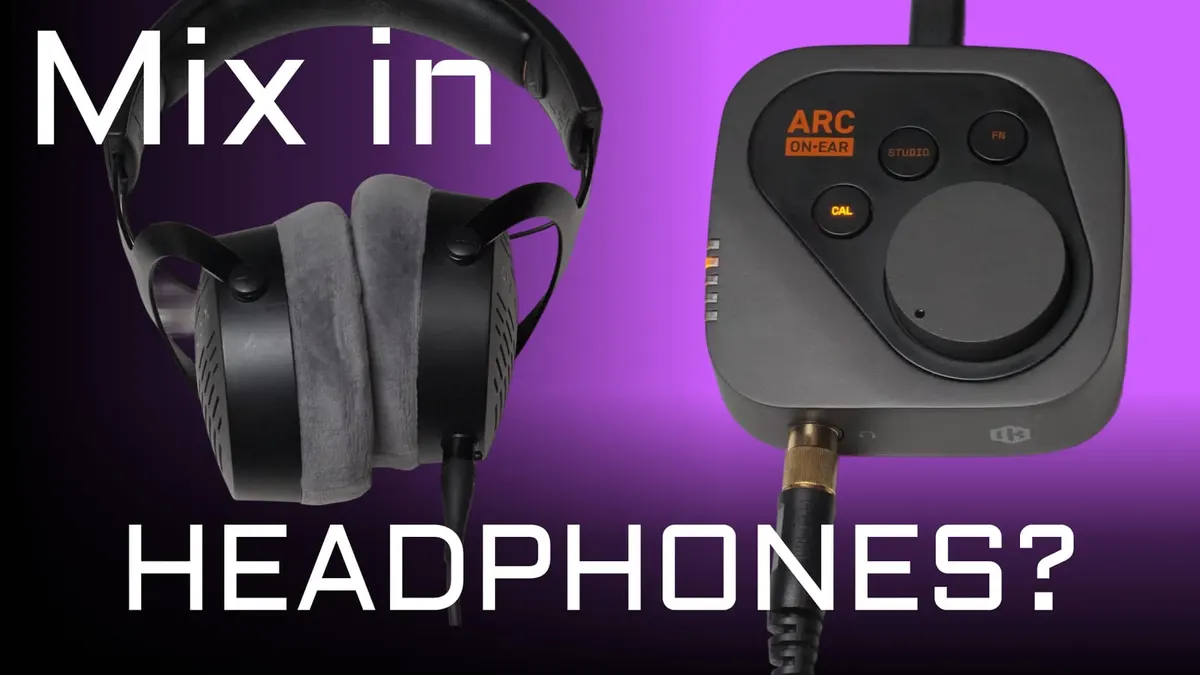
In this week’s video, we take a look at the IK Multimedia ARC ON-EAR headphone correction system. This hardware headphone DAC and amplifier corrects the frequency response for over 250 different headphone models. You use an app on your computer to set it up, but then the correction runs in the ARC ON-EAR, without needing to run the software to use it. And this means you can use it with your phone, too.
So, can you mix your video projects with headphones? And will your mix translate well for viewers on phones or speakers or in cars? With ARC ON-EAR, the mixes you make with headphones will translate better, because you’re listening with a more neutral sound than your headphones on their own.
If you want to nerd out on measurements of some specific headphones and how well ARC ON-EAR corrects them, have a look at DMS’s video: https://www.youtube.com/watch?v=t_TzR8cpc18
Gear used or mentioned
The links below are Amazon, B&H Photo, Sweetwater, or other affiliate links. As an affiliate, I earn from qualifying purchases.
Read the transcript
Does the IK Multimedia ARC On-Ear let you mix and master audio for video with confidence that it’ll translate to other playback systems, like studio monitors or a film festival’s system? There are three core problems with headphones for mixing: first, even “reference” headphones aren’t perfectly neutral, often tuned to sound pleasant rather than flat. Second, isolated ear cups remove the natural interaural time differences our brains use for spatial perception — you get isolation instead of that real-world crosstalk. Third, headphone amplifiers vary widely in quality, output impedance, and power, especially on mobile devices and field recorders optimized for battery life over fidelity, which can itself color the frequency response you hear.
The ARC On-Ear addresses these with a hardware frequency-correction feature: connect it to your computer’s app, select from over 250 measured headphone models (IK Multimedia has correction profiles for each), then you can disconnect it and use it standalone, even with a phone — tested fine with an iPhone 16. You can save up to 5 presets. It has a quarter-inch headphone output, a volume knob, and buttons for correction on/off and a “Studio” mode that adds intentional crosstalk between ears to emulate real-room listening, addressing the second problem. It’s also a genuinely good headphone amp — no problem driving 300-ohm headphones, which often struggle to get enough volume from a phone.
A key advantage: once configured, you can quit the companion app entirely and the correction still applies to all USB-C audio from your computer — the processing happens in the hardware box itself. I’ve compared this favorably to Sonarworks SoundID Reference, which I love in concept but have had constant reliability trouble with as a background app on macOS through OS updates.
The device also offers speaker-modeling presets (like classic Yamaha NS10s) for a final mix-check listen, a three-band EQ plus an EQ tilt for warming or brightening the correction curve, and a phase-align option (essentially linear-phase EQ) that adds latency, so you’d want to turn it off when checking picture sync and back on when checking your mix. It’s mostly metal, has a replaceable internal battery, a separate power switch, and a 3.5mm analog input for connecting a mixing board.
Comparing my Beyerdynamic DT900 Pro X through the ARC to my Focal Solo 6 monitors, the match was surprisingly close, though not a perfect dead ringer — the Studio spatial mode helps a little but doesn’t fully solve the headphones-vs-room problem. An independent measurement video I found (channel DMS, linked below) confirms the correction gets headphones meaningfully closer to neutral, especially open-back models, without being perfect. My only real gripe: I wish it powered off automatically when my computer shuts down, though there is a sleep timer you can set. Overall: is it helpful? Yes. Is it perfect? No, but it gets you very much in the ballpark, and I think it’s money well spent if you spend a lot of time mixing in headphones. Get out there and make some great sound. Talk to you again next week.