
DEITY V-Mic D4 Camera Top Microphone
· Audio · Microphones · 12:41
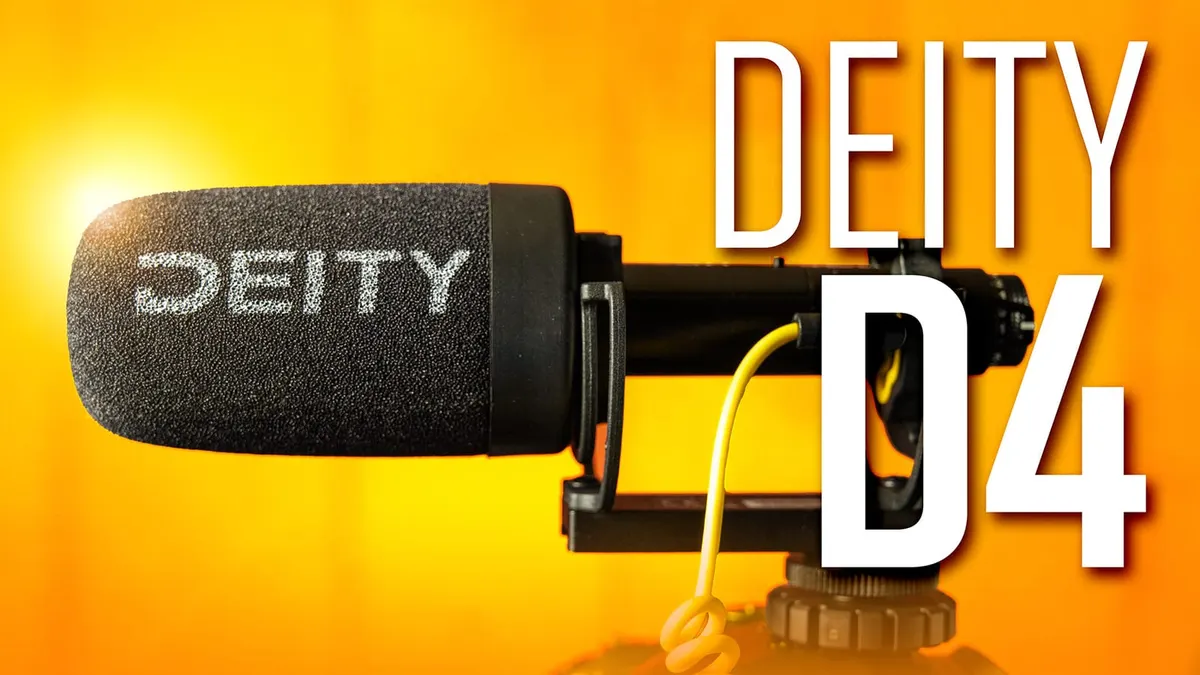
In this week’s episode, we have a look at and listen to the DEITY V-Mic D4 camera-top shotgun microphone. This $99 USD microphone is at home on a camera, on a boom pole, connected to a mobile phone, or even to a Mac or PC. The D4 is powered via any AAA battery which can power it for up to 60 hours if you use a lithium battery. It automatically powers on or off with your camera, has a directional pickup pattern, and sounds best when you boom it within about 40 cm of the person you’re recording. One of my favorite features is the stemless gain dial which allows you to finesse the the gain. There is also an innovative feature — a shoe mount for a wireless transmitter on the shock mount rail. Let’s take a closer look and a listen!
Find out how to boom this mic to make it sound its best here.
Gear used or mentioned
The links below are Amazon, B&H Photo, Sweetwater, or other affiliate links. As an affiliate, I earn from qualifying purchases.
- B&H, Trew Audio, DVE Store, Amazon — DEITY V-Mic D4 microphone
- DEITY V-Mic D3 Pro microphone — B&H, Amazon
Read the transcript
[Music] foreign [Music] in this episode we’re taking a look at the new deity v-mic D4 camera top shotgun microphone it also can be used on a boom pole and in fact in this entire episode you’re hearing the D4 recorded into a Canon C70 and it is boomed above me just right here so first let’s get you some samples of this microphone compared to the deity v-mic
D3 Pro and the videomic ntg from rode it is an old maxim of mine that when you have excluded The Impossible whatever remains however improbable must be the truth it is an old maxim of mine that when you have excluded The Impossible whatever remains however improbable must be the truth it is an old maxim of mine that when you have excluded The Impossible whatever remains however improbable must be the truth it is an old maxim of mind that when you have excluded The Impossible whatever remains however improbable must be the truth it is an old maximum of mind that when you have excluded The Impossible whatever remains however improbable must be the truth it is an old maxim of mind that when you have excluded The
Impossible whatever remains however improbable must be the truth it is an old maximum of mine that when you have excluded The Impossible whatever remains however improbable must be the truth it is an old maximum of mind that when you have excluded The Impossible whatever remains however improbable must be the truth it is an old maximum of mind that when you’ve excluded The Impossible whatever remains however improbable must be the truth now the idea is that you can make your own choice use your own ears to figure out which of those you think sound the best we just wanted to provide you some audio samples to do some of that yourself next when there are sounds in the room in the space where you’re recording that are off axis it can actually sound a little bit different there’s coloration there’s a there’s a polar pattern or directionality to the microphone here’s a little sample of that so I’m going to go ahead and turn so that we’re 90 degrees off axis from the front of the microphone and that’s what we’re talking into right now the side of the microphone continue to turn that I’m turning all the way back to the rear of the microphone at 180 degrees off axis next how does this microphone deal with sibilance sibilance is the sizzling noise you get when someone says the letter s or C or some other letters here’s a sample she sells seashells by the seashore by the seashore she sells seashells the D4 comes with both a foam cover and it also comes with a fur cover that you can put over that here’s a sample Outdoors to see how that works and then we’ll come around a little bit see if there’s any whooshing of wind that happens when I’m moving around like this so if we were vlogging a little bit we also tested how RF immune the microphone is what does that mean when you put a radio transmitting device near a microphone sometimes the microphone will pick that up as a sort of a digital correctly noise and so we used our mobile phone here we ran Wi-Fi we ran
LTE we made a cellular call and in all cases we didn’t pick up any sort of interference from the microphone which is really good because the little sliding shock mount here has a spot on the front where you can attach a small wireless microphone transmitter and so having that transmitter close it’s really important that the microphone be able to reject any sort of radio frequency any sort of transmission coming out of those transmitters and it does a great job here’s a sample with the wireless transmitter from DJI the
DJI mic connected to the D4 and then transmitting over to a Panasonic gh5 this is what it sounds like what we’ll do is just we won’t do any processing just normalize it to -23 lufs handling noise when you have a microphone sitting on top of the camera in particular or if at the end of a boom pole and you’re moving things around it’s really important the shock mount prevent that vibration from the camera either when you’re handling it or the boom Pole from transferring to the microphone capsule and creating this low frequency sort of rumbling sound and in our test the shock mount itself did a really good job at that what you can expect here is I move the camera around even if I
I think what you’re hearing are the little uh there’s like little tassels for the camera strap on the side of the camera that’s what you’re actually hearing right now but as I move it around see what the handling noise is like as I walk it’s hard for you to see me right now this is actually the rim light now I’m standing by the key light oh it’s burning out too hot okay so there’s an example of the handling noise now this microphone is battery powered the great thing it is a replaceable battery you can use your own battery you’re not tied to an inbuilt battery and I think that’s one of the big advantages this mic has over some of the more expensive camera top shotgun microphones that we’ve seen in recent years that even includes the D3
Pro and the videomic ntg from rode so in this case if you run out of charge you put a new battery in and you keep going on those you’d actually have to hook it up to something and charge it and when after several years of use those batteries kind of lose their capability of holding a charge then it becomes a little bit of a problem you have to either send it in to have it replaced or maybe they have some sort of
Kit you can get but in any case this is really easy in our test we were able to power it for well over 24 hours the spec that deity cites is 60 up to 60 hours that’s with a lithium battery so just be aware of that if you are looking for a full 60 hours you’re going to want to purchase a lithium AAA Battery to work with this but with a little alkaline battery that came with it we’re now probably somewhere around 28 hours and it’s still going strong let’s run through the pros and cons really quickly
I think overall it has a generally balanced sound that has a little bit of a mid forward boost to it I think it eqs really well so it has to me it’s like that 1940s sound a little bit just mild but you can actually EQ it and make it sound really nice as well so when we have those samples at the start where we didn’t do any sort of processing you can hear exactly what I’m talking about I love that there is a variable gain dial and so you can it’s a very smooth dial and you can dial it anywhere from -5 actually a pad it reduces the incoming sound all the way up to plus 10 DB and it works great with our Panasonic gh5 we also tested it here and are recording here with the Canon C70 and we’re getting great results on the shock mount there is a 3 8 inch tap so you can attach it to most standard boom poles it also comes with an adapter for quarter inch so if you want to put it on something with a quarter inch screw you can do that as well and that’s exactly what we’re doing here we have it on a mic stand with a 3 8 inch stud and that allows us to get it exactly where we need it now there’s only one port on this microphone and it is a USBC port and so my first question was well how do I get this into a camera that has a 3.5 millimeter microphone input and the answer is it is actually a smart Port as deity is calling it you have USBC on one side and it comes with a cable that you plug USBC in and it has a 3.5 millimeter cable on the other end so it actually then converts the output on that port to analog to get it into your camera if on the other hand you’re connecting to a digital device of some sort whether that be a Mac PC an Android iOS device then you can do that as well using a USBC to USBC cable the microphone automatically powers on and off based on the device you have it connected to so when the device you have it connected to is on the microphone comes on when that device is off the microphone automatically shuts off and it works really well so far we have not had any issues with it all of our cameras have turned it on and same with hooking it up to the computer just turned on right away the microphone is mounted on a shock mount and that of course is connected to a shoe Mount but the nice thing is that you can actually adjust that rail along the issue Mount and so you can push it all the way forward if you’re using it on a hybrid camera where you have a viewfinder and you want to be able to hold your eye up to the viewfinder to get the microphone out of the way if you’re using a really wide angle lens you can push the microphone back so that the microphone is not in the shot so it gives you all sorts of flexibility the microphone is also very clean in terms of self noise we did our practical noise floor sample that we typically do and the way that works is I record in this quiet space do some talking leave a moment of silence or five seconds or more of silence and then in post I boost the levels so that they’re at -23 lufs that’s going to be based on the dialog itself and then measure that silent portion and in this case it came in at minus 65.5 DB RMS Max that’s actually very good so we’re looking for anything under -60 and this microphone definitely delivers included with the kit is a foam cover the fur windshield a USBC to USBC cable USBC to 3.5 millimeter Cable in fact two of those one for most cameras and another four Sony cameras and then there is also a quarter inch to 3 8 inch adapter thread for the for mounting the mic whether it’s going to be on quarter inch or 3 8 inch depending on if you’re using a boom Pole or something else with a quarter inch thread there’s a two year warranty which I believe is extended six months when you register your microphone and the price of the microphone kit with everything we listed here is 99 U.S at the time of this review two cons number one uh the wind the fur wind cover is okay but not amazing so it’s really nice that it comes with it and it’s going to help when you’re out in slight breezes if there’s anything more than a slight breeze or you move the microphone really really fastly some air will get through there and you’ll get a little bit of that kind of low frequency sound a high pass filter is going to be able to address some of that so you’re not generally going to get a lot of distortion but if you do anticipate being out in the wind a lot you’ll probably want to look at other covers for the microphone but if you’re kind of in a regular everyday it’s probably fine one thing we notice is when we hook this up to our Mac is that the input level wasn’t quite as strong even at all the way Max on the gain and sliding the dial up or the little slider in Mac OS and the sound preferences to Max we were still peaking somewhere around -12 DB so if you are planning to use this for live streaming for example you may want to boost it a little bit say if you’re using OBS you’ll want to boost it just a little bit in OBS to get the levels where you need them the good thing is that that also makes sure that you’re not going to clip so you can apply a compressor and really even things out and then boost a little bit and because the the microphone doesn’t produce a lot of self noise it should be okay to add that digital boost in post now one of the biggest questions I think people are going to ask is what about this mic versus the rode videomic go to or the new rode video micro too I have not used a micro two so I can’t speak from experience on that particular mic however on the rode video might go to a couple of things number one the deity doesn’t have all the fancy software stuff that that mic has but it does have physical control so you do have a physical gain dial which I actually really really prefer that to me is more important than having a mic that evidently has you know that has all these additional things you can do with it in terms of compressors and so on but if you don’t have any physical controls that’s a little bit of a downside so in my subjective opinion I prefer the D4 overall this is a pretty strong contender in the sub 100 camera top shotgun microphone category the sound is again generally balanced a little bit mid forward voicing but it does EQ really nicely not overly sibilant I think overall a good sound I think for the price and everything that you get there is a lot of value with the deity V mic D4 hope that was helpful for you if you have any questions go ahead and leave those down below and if you’ve not already subscribed make sure you do that and we’ll be sure to get you more great videos on how to improve your Lighting and Sound for video talk to you soon foreign [Music]