
Electro-Voice RE20 Broadcast Microphone
· Audio · Microphones · 13:40
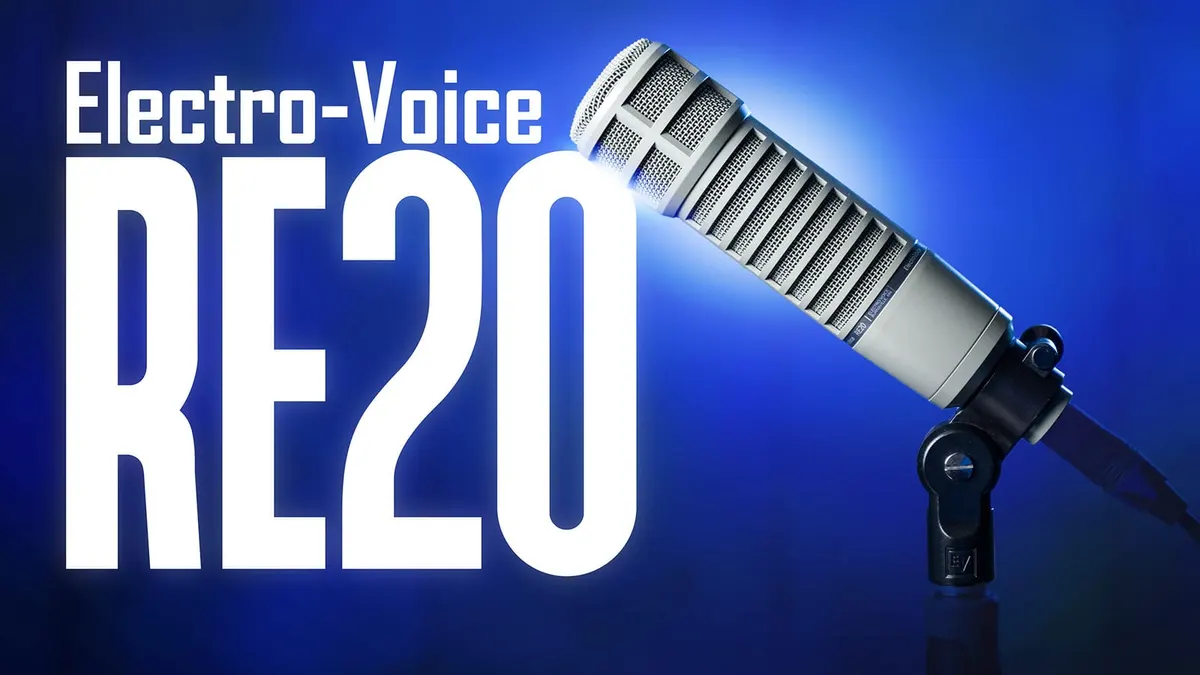
In this week’s episode, we have a look at and a listen to the Electro-Voice RE20 dynamic broadcast microphone. This iconic broadcast microphone produces rich low frequencies along with a substantially crisper sound at higher frequencies than other similar microphones. Let’s get you some raw spoken word audio samples and run the mic through several tests so you can decide whether this may be a good addition to your podcast or recording kit.
To compare to other similar microphones for spoken word audio, here are some of my other microphone reviews: SHURE SM7B vs SM58 — https://youtu.be/KPAKlk1Tt-I SHURE SM57 (vs SM58 & SM7B) — https://youtu.be/ZzbnKBLGW04 SHURE KSM8 — https://youtu.be/IeWP479ndjY SHURE MV7 — https://youtu.be/fhFCsL7bq6Q Samson Q9x — https://youtu.be/mFT3zzOUT3A
Gear used or mentioned
The links below are Amazon, B&H Photo, Sweetwater, or other affiliate links. As an affiliate, I earn from qualifying purchases.
- Electro-Voice RE20 dynamic broadcast microphone — B&H, Sweetwater, Amazon
- Sound Devices MixPre audio recorder — B&H, Trew Audio, Sweetwater, DVE Store, Amazon
- Rycote PCS Microphone Quick-Release System — B&H
- Aputure LS 300X used for background light — Aputure, B&H, Amazon
- Aputure Spotlight Mount — Aputure, B&H, DVE Store. Amazon
- Rosco Gobo creates the pattern on the back wall — B&H
- Canon C70 cinema camera — B&H
- Canon RF 24-70 f/2.8L lens — B&H, Amazon
- Schneider Radiant Soft 1 diffusion filter — B&H
- Panasonic GH5 camera — B&H, Amazon
- Panasonic 12-35mm f/2.8 II lens — B&H, Amazon
Read the transcript
[Music] foreign [Music] in this episode we’ll take a look at a classic broadcast dynamic microphone the
Electro Voice re20 and this entire episode is being recorded with the re20 into a sound device’s mix pre 3 audio recorder so that you can hear what it sounds like first let’s get you some audio samples that include the re20 and the Shure sm7b and the earthworx ethos to other broadcast style microphones on three different voices it is an old maxim of mine that when you have excluded The Impossible whatever remains however improbable must be the truth it is an old maxim of mine that when you have excluded The Impossible whatever remains however improbable must be the truth it is an old maximum of mine that when you have excluded The Impossible whatever remains however improbable must be the truth it is an old maxim of mine that when you have excluded The
Impossible whatever remains however improbable must be the truth it is an old maxim of mind that when you have excluded The Impossible whatever remains however improbable must be the truth it is an old maxim of mine that when you have excluded The Impossible whatever remains however improbable must be the truth it is an old maximum of mine that when you have excluded The Impossible whatever remains however improbable must be the truth it is an old maximum of mine that when you have excluded The Impossible whatever remains however improbable must be the truth it is an old maxim of mine that when you have excluded The Impossible whatever remains however improbable must be the truth and here are a variety of other samples and tests pluses are the sound you get when someone says the letter P or B little puff of air comes out of your mouth and goes directly onto the microphone capsule Let’s test to see how that does here
Peter Piper picked a peck of purple pickled peppers and then I’ll talk just past the microphone here Peter Piper picked a peck of purple pickled peppers next up sibilance sibilance is the sizzling sound that the voice makes when someone says the letter s or C some voices have a lot more of it my voice tends to have quite a lot of it here’s a sample she sells seashells by the seashore by the seashore she sells seashells the microphone clip that comes with the microphone is no sort of shock mounting whatsoever there is some internal shock mounting but let’s see what happens when
I bump the stand and the microphone itself [Music] the re20 does have a high pass filter it sounds like at least based on the specs that it’s fairly extreme it starts as early as 400 Hertz and starts rolling off but let’s see how it sounds so right now it is currently off and this is what the re20 sounds like and this is what the high pass filter turned on so that you can get a sample of what that sounds like relative to no high pass filter so it should thin out my voice a little bit make things a little bit um not quite so big on the bottom end if you will and that’s what it sounds like let’s go ahead and switch it back off and here we are with the high pass filter turned off again on the Electro
Voice re20 here’s a sample of off-axis coloration so I’m talking directly into the microphone first let’s go ahead and turn so that we’re talking into the side of the microphone we’re now 90 degrees off axis and if I continue to turn more we are now 180 degrees off axis coming back to the microphone at 90 degrees off axis and then back onto the front of the microphone at zero degrees off axis the idea here is to see how my voice changes not only in terms of the overall levels but also the coloration does it change the Timbre in any way when we get to the back okay let’s cover the pros first number one I think you’ve probably gathered already as a broadcast dynamic microphone this has a really nice rich low end that seems fairly well controlled if you have someone with a really deep voice it could be a little bit boomy woolly perhaps and so that’s one thing to watch out for but I think for most people’s voices if you’re looking for that broadcast sound this microphone clearly clearly delivers now it also has a better I think high frequency response a crisper sound to it than a lot of other broadcast Dynamic microphones specifically the Shure sm7b so that’s where this one shines a little bit more if that’s what you’re looking for the build of this microphone is pretty legendary as well Rock Solid Steel uh feels really really solid you’re not going to have problems with that and in fact that also helps with RF immunity that is to say you’re not going to get a lot of radio frequency or electromagnetic interference with this and especially here we did an RF test where we held a phone up to it with LTE with Wi-Fi and also a wireless transmitter microphone transmitter set to 524.200 megahertz we didn’t pick up any sort of electromagnetic or RF interference so this microphone and its build definitely prevent any of those sort of problems as you saw in some of the earlier samples as well the variable
D design also helps with plosives somewhat you’re still going to have to use good microphone technique and you’ll notice for example here I have it off to the side aimed at my mouth at 45 degrees and the idea with that is that I talked just past it so I don’t get a lot of those plosive issues and the microphone’s design itself also helps prevent that to some extent it also helps them with proximity effect if I get up really really close on the microphone here you can notice that it’s picking up it’s more sensitive in the lower frequencies now even though it’s it’s louder but it’s also more more sensitive in the lower frequencies and this handles that better than a lot of the other microphones I’ve experienced also has a high pass filter which helps manage boominess especially with deeper voices and I was worried about this high pass filter at first because it starts to cut in at about 400 Hertz which is pretty high like that’s that’s cutting into most people’s voices but when we turned it on it didn’t seem to create a lot of problems for us it was fairly mild and so it just does a nice job of removing some of that boominess without making the microphone sound really thin the microphone does very very well in terms of self noise and the way we measure that is with our kind of practical noise floor test it’s not as scientific it’s a very practical test but what we do is we come into this quiet space turn everything off record me just speaking into the microphone and then I leave a period of about five to ten seconds with no talking and then we measure that in post so we bring it in we normalize to minus 23 lufs so we’re at a standard level so we can compare microphone to microphone and in this case it came in the silent portion came in at minus 65 DB RMS Max without a high pass filter and if we added a high pass filter in post at 65
Hertz with 24 DB per octave cut we came in at minus 77.6 DB RMS which is absolutely fantastic so this microphone does great in terms of self noise you’re not going to get a lot of that hissing and other noise that you have to work with now of course you’re going to have to use a good preamplifier as well to get those great results in this case we’re using a mixed Bree but it’s not the microphone that’s going to be contributing a whole bunch of that hiss this microphone can be used for almost anything if you are recording instruments and other things like that there are plenty of these in recording studios for good reason they just work really really well in lots of situations so it’s sort of the mic you can buy once and it will last your entire career it also does have a three-year U.S warranty now I do want to tell you a story I’ve had this microphone since I believe 20 14 or 15. so I’ve had it for at least seven maybe eight years now and when I had it the first I think I’d had it for about nine months and it stopped working I just get a bunch of noise when
I plugged it in so I sent it back to
Electro Voice they repaired it sent it right back to me no problem since then so the warranty coverage was really really great so I haven’t had any problems with it since then so we’ve got seven years of flawless performance since then and I just wanted to let you know that I bought this with my own money nobody’s sponsoring me to make this video so I don’t have any reason to sugarcoat this now are there some cons I think everything has its downsides I would say that this microphones the included clip has no shock mounting and when you do bump the stand that transfers into the microphone and you get a very low frequency kind of boom and in some cases some really heavy resonances so you’re gonna have to be careful with that or you might want to look into buying a third party or an add-on shock mount if you have a tendency to bump your microphone stand I also find including on my voice that the higher frequency response can be a little bit harsh on sibilant voices like mine so you’re either going to need a de-esser or you might want to look at other microphones as I mentioned the price of the microphone is 450 U.S at the time of this review and it’s actually been that price for a number of years now how does it compare to something like the Shure sm7b and I want to First say these are just my own Impressions this starts to get very very subjective very quickly some I don’t really believe that there’s such thing as a an objectively best microphone so I would disabuse yourself of that notion if you were kind of thinking of it in those terms so overall here are my impressions of the re20 versus the sm7b
I prefer the darker sound of the Shure sm7b it doesn’t it’s not as sensitive in the higher frequencies for voices with a lot of sibilance like my own on the other hand I prefer the re20 on most other voices it has an overall crisper brighter sound to it which I think works really really well I will say that the re20 doesn’t require as much gain so it requires about 4 DB less gain on the same voice at the same distance versus the Shure sm7b so it’s not you still need a very good preamplifier that can supply at least 60 DB of clean game preferably 65 I’m running it at 62 here so that’s a nice thing you don’t need quite as much gain but you are still going to need a good strong preamplifier to make this work well if I could only choose one of these microphones well good news I didn’t have to choose I’ve actually purchased both of them the re20 and the sm7b I love them both but for different reasons as I just mentioned on
Danny’s Voice I much prefer the re20 on my voice I prefer the sm7b what about compared to microphones like the Earthworks ethos the ethos is actually a much newer microphone it’s also a condenser microphone it is a it’s my favorite microphone for live streaming however with that microphone because it’s a condenser you generally are going to pick up a little bit more Ambient sound in the room in the space around you you work a little bit farther away from it and so it’s going to have a tendency to pick up a little bit more of what’s going on in the room so if you are working in a space that does have some noise that’s where I think something like the re20 or the Shure sm7b will probably be a better choice you generally have to work up closer on those and as a result of that your signal to noise ratio is different you’re getting more signal because you’re closer um so that’s kind of the difference between those but if you are working in a very quiet space I do very much like the Earthworks ethos on my voice at least what about compared to the Electro Voice re27nd I’ve never used that microphone however what I can say about it is that on all of the samples that I’ve heard for spoken word it just sounds a little too bright for my personal taste that doesn’t mean you have to feel the same way about it if you feel differently there are people that love that microphone I think that’s great I think it’s probably going to be better suited to much darker voices that don’t have a lot of high frequency energy in them it will help them to sound a little airier a little bit more balanced um but on my voice absolutely not interested in that microphone and to me it just sounds a little too brittle so that’s my overall just subject purely subjective observation so overall the re20 is a rock solid Dynamic broadcast mic with a rich bass response and a crisper higher frequency response and you typically find on most dynamic microphones really rock solid microphone works well on many voices and should last your entire career if you want that rich broadcaster sound the re20 is an excellent choice for voices without too much sibilance so there’s our look at it now we do have some other microphone reviews broadcast microphone reviews that if you’re interested we’ll put a link to those both up here if you’re on a desktop computer watching on YouTube or down in the description if you prefer what you can do is pull those up in a separate browser Tab and you can actually play them back and forth if you want to hear those other microphones compared to this we’ve normalized them to the same level so that you can compare them without problem so hope that was helpful if you have any questions go ahead and leave those down below and if you’ve not already subscribed make sure you do that and we’ll be sure to get you more great videos on how to improve your Lighting and Sound for video talk to you soon [Music] thank you