
PicoRecorder - 6 channel wireless receiver, recorder, mixer, and timecode generator in one
· Audio · Post-production & software · 13:26
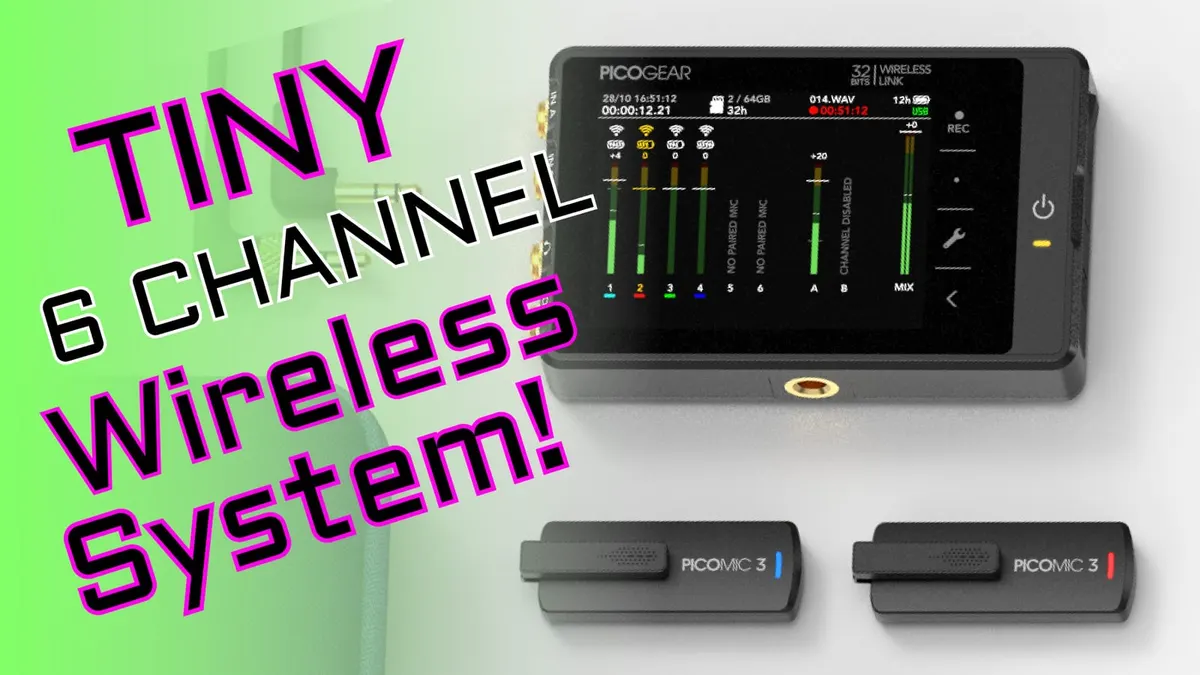
In this week’s episode we have a look at PicoGear’s new PicoRecorder kit, an all-in-one receiver that pairs with the PicoMic 3 Pro. The PicoRecorder is a nifty receiver/mixer/recorder interface that records 32-bit float audio right to a full-size SD card. It also has built-in timecode capability, two extra inputs for wired mics, and space for up to 6 PicoMic transmitters in the kit case. Very clever, PicoGear! Let’s take a closer look and listen!
Gear used or mentioned
The links below are Amazon, B&H Photo, Sweetwater, or other affiliate links. As an affiliate, I earn from qualifying purchases.
Read the transcript
The Pico Recorder is an all-in-one 32-bit float audio recorder and six-channel wireless microphone receiver. It is also able to take in wired connections from two different sources, and it records all of those up to a total of 10 tracks including a stereo mix in one device. So, it’s a mixer, it’s a recorder, it’s a wireless receiver, and it’s a basic timecode generator all in one little package. Full disclosure, PicoGear sent this to me free of charge.
PicoGear approaches things a little bit differently than other consumer wireless microphone systems like the Rode Wireless Pro or the DJI Mic 3. Instead of recording at the transmitter, the Pico Recorder records at the receiver in 32-bit float — as far as I’m aware, the first consumer wireless microphone system that transmits 32-bit float audio. Each Pico mic samples the audio in 32 bits directly and sends it in 32-bit float to the receiver via PicoGear’s own X32 wireless technology. No gain is applied at the Pico mic itself — you get the raw signal and gain it up at the receiver, so you don’t have to worry generally about clipping your audio.
Pros from my perspective: a 2.8 inch touchscreen with haptic feedback, simple menus, two 3.5mm mono inputs that can supply 3 volts plug-in power, a headphone output that works fine with headphones under 80 ohms, and it records to a full-size SD card. The transmitters are tiny and light, much less intrusive than most other consumer wireless mic systems. The mic capsule itself is on the clip, so the bigger piece is hidden behind clothing while the mic sits on the clip — an innovative design. The entire kit charges together in its case with USB-C, and it’s firmware updatable.
There is some latency — 18 milliseconds, which is more than some other systems like the Rode Wireless Pro, but the trade-off is more time for the system to recover from errors and prevent dropouts. That’s less than one frame at every practical video frame rate, so you shouldn’t have sync issues.
In terms of distance, in line of sight we got 125 meters with no problem. Not in line of sight, we got our first dropout at about 40 meters — better than a lot of other systems I’ve used. Indoors, I walked throughout my entire house with no dropouts at all. It records at 48 kilohertz, so if you want 192 kilohertz for sound design, this isn’t the system for you.
A few cons: it has inbuilt batteries that are not user replaceable, though PicoGear told me they will replace them if needed. The timecode implementation serves one specific use case — sending linear timecode to your camera so you can sync the 32-bit float audio in post. The microphone’s maximum sound pressure level is 128 dB SPL — plenty for dialogue, but not for extremely loud sources like opera singers or motorsports. It can also be used via USB to a computer, though it didn’t work with my Mac.
The kit is available in three configurations: a starter kit with one PicoMic 3 Pro and the Pico Recorder, a creator kit with a pair of PicoMic 3 Pros, or a pro production kit with the full set of six PicoMic 3 Pros — priced at $349, $399, and $619 US. You can also buy a single PicoMic 3 Pro transmitter for $80. My take: this is a great option for a lot of creators — an amazing kit with six channels of wireless audio plus two additional wired inputs plus a stereo mix all on a tiny, easy-to-use recorder. Nice job, PicoGear. Get out there, make some great sound, and we’ll talk to you again soon.