
Premium Budget Mic for Podcasting! Earthworks SR117
· Audio · Microphones · 12:16
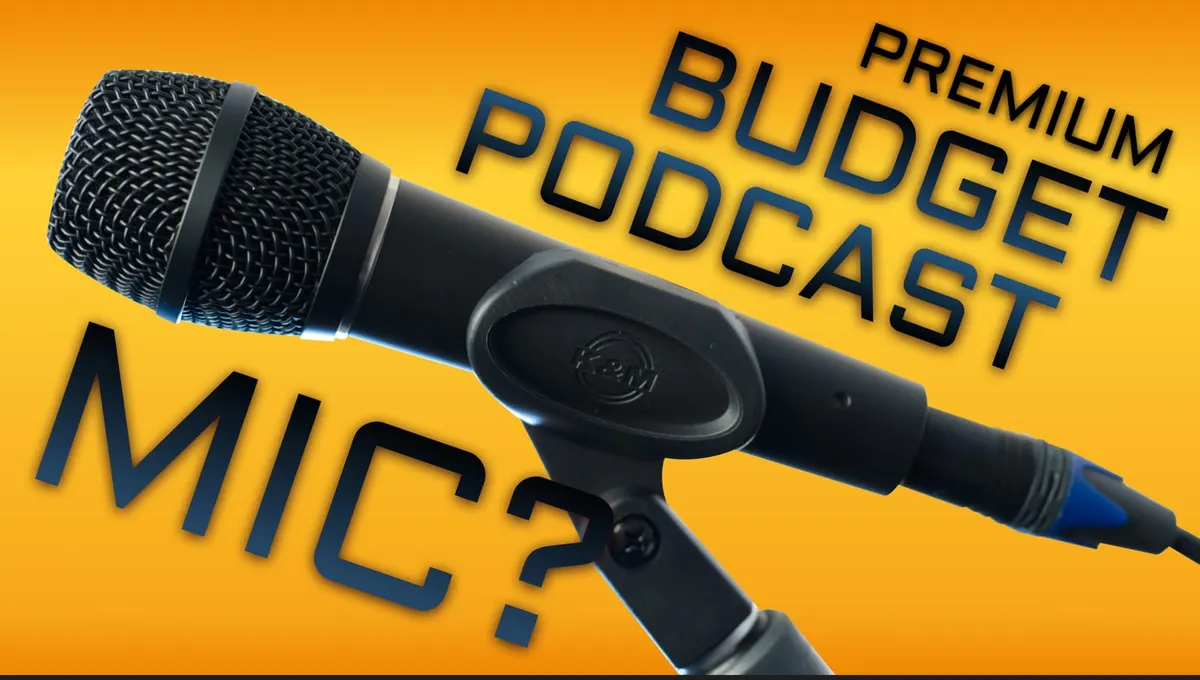
In this episode we take a look at and listen to Earthworks’ SR117 vocal mic! This interesting handheld number is built for high-quality vocal performance just like the beloved SHURE SM58, but this one is a phantom-powered condenser mic rather than a dynamic mic, allowing you to use less gain for similar-sounding results. Its super-flat frequency response also allows you to shape it however you like with EQ in post. In this episode we cover the SR117’s key features, compare it to a few similar mics, and explore situations in which this might be your best choice for a vocal mic. Let’s take a closer look!
Gear used or mentioned
The links below are Amazon, B&H Photo, Sweetwater, or other affiliate links. As an affiliate, I earn from qualifying purchases.
- Earthworks SR117 Supercardioid Vocal Condenser Microphone — B&H, Sweetwater, Amazon
- Earthworks SR314 Handheld Cardioid Vocal Condenser Microphone — B&H, Sweetwater
- SHURE SM58 Cardioid Dynamic Vocal Microphone — B&H, Sweetwater, Amazon
- Sound Devices MixPre Series II Recoders — B&H, Sweetwater, Amazon
- Sound Devices 888 Field Recorder/Mixer — B&H, Sweetwater
- Impact Turtle-Base C-Stands — B&H, Amazon
- Amaran 200x S LED light — B&H, Amazon, Aputure
- Aputure Light Dome II soft box — Aputure, B&H, Amazon
- Aputure Spotlight Mount — Aputure, B&H, DVE Store, Amazon
- Rosco Prismatic Glass Gobo in Cool Lavender — B&H
- Canon C70 Cinema Camera — B&H
- Canon RF 24-70 f/2.8 lens — B&H, Amazon
- Panasonic GH5 camera — B&H, Amazon
- Panasonic 12-35mm f/2.8 II lens — B&H, Amazon
Read the transcript
[Music] In this episode we’ll take a look at and a listen to the Earthworks SR117. It is a live vocal microphone; however, we’re coming at this from a different perspective. In my case we do more live streaming, podcasting, and that type of thing, so we’re going to look at it from that viewpoint. Now live microphones, like for example the Shure SM58, have been used in live performance for years and decades, many decades, and there are actually much newer ones as well. Well, Earthworks says this is the best live vocal microphone, period.
What is this? It’s a handheld microphone, or you can put it in a clip on a stand like we’re doing here. It is designed for vocals or spoken word audio. In our case it has a super cardioid polar pattern, so it is directional, which is a little different- some of the others have more cardioid polar patterns, so they don’t pick up as much in the back. This has a tighter pickup on the front and a tiny bit in the back. Is it really the best vocal microphone in the world? Well, another big thing that’s different about this one is instead of being a dynamic microphone with a very low output signal, this is actually a condenser microphone, so you don’t need quite as much gain to drive this microphone.
So let’s take a look at some of the other things- I think probably the standout to me about this microphone is its super, super flat frequency response. Let’s go ahead and start with getting you some raw samples that have not been processed at all. It was easier to know it than to explain why I know it. If you were asked to prove that two and two made four, you might find some difficulty, and yet you are quite sure of the fact.
Now you might think to yourself, like I thought when I first listened to this: is well, I think my voice actually sounds better on some of those other microphones, and that may well be the case. What’s happening here is that this microphone is being brutally honest, and the nice thing about having a brutally honest microphone- if it captures everything evenly across the frequency range of audible hearing- the nice thing is that then you can sculpt it, you can use an equalizer to fine-tune it and get it to sound exactly how you want. So that’s a really nice thing about this. The other microphones that we tested there, I would say, are somewhat colored, meaning they may sound really great on some voices, they may not sound quite as great on other voices, but they are colored, they’re not super neutral. And in fact you can see that with the Shure SM58’s frequency response chart; it’s pretty obvious, and to your ears even, I find that the SM58 isn’t a great fit for my voice because it tends to emphasize some of the sibilance quite a bit, so that’s something to watch for.
So that’s one thing that makes this microphone very unique. In fact, in the production sound world, with video, TV, film production, one of the most common indoor boom microphones is the Schoeps Colette CMC 641, and I have that microphone, I have owned it for a number of years, but sometimes I don’t like using it, and the reason is it’s so brutally honest, it is very neutral in how it picks up sound overall, and this is similar. The beautiful thing about that, as I mentioned before, again, though, is you can sculpt the sound, you can EQ it and make it sound exactly how you want.
Let’s get you some samples. There are a number of tests we did here. First of all let’s go ahead and show you the polar pattern, how it picks up sound from certain angles and rejects from others. What we’re looking for here is does it change the sound, not just reduce its level, but actually change the quality of the sound when it gets off axis. Let’s get you a sample of the polar pattern of this microphone. Right now I’m talking to the front of the microphone at 0 degrees. Now I’m going to go ahead and turn the microphone so that we are off axis 90 degrees- this is talking into the side of the microphone- and now I’m talking into the back of the microphone at 180 degrees off axis, so you can hear what that sounds like. There should be a little bit of pickup here, probably the null point is right about here where we’re going to get the least pickup. Now we’re back at 90 degrees off axis, and now we’re back directly on axis at 0 degrees. And the answer appears to be no, it actually does a really, really nice job- that in the back it rejects the frequencies pretty evenly, so it’s not as if off-axis sounds start to sound really weird or otherworldly or non-lifelike; they actually still sound lifelike, they’re just quieter, which is exactly what you want when you’re working with a microphone like this.
Next up, a few other tests: sibilance, plus proximity and any sort of handling noise. My voice has plenty of what is called sibilance in it- that is the sizzling sound that occurs when I say the letter S or C. Here’s a sample: she sells seashells by the seashore, by the seashore she sells seashells. This microphone is unforgiving, it captures that, but I don’t think it emphasizes it more than typical; what you’re hearing is actually my voice. Here’s a plosive test- a plosive is when you say the letter P or B or other similar letters, you get a little puff of air that comes out of your mouth; if that goes directly onto the microphone’s capsule you can get this sort of low frequency poofing sound. Here’s an example: Peter Piper picked a peck of purple pickled peppers. And if I turn just a little bit: Peter Piper picked a peck of purple pickled peppers.
Here’s an example of the proximity effect: when you get right up on the microphone you get a lot more bass response- if you’re looking for that you can definitely get it, a lot of times music vocalists will intentionally do that for effect- and then of course here’s what it sounds like when you’re not right on top of the microphone; this is approximately, I would say, 7 to 10cm from the front of the mic. This is a handheld microphone, so let’s see how it does in terms of handling noise. If I switch hands- it’s definitely going to pick some of that up, there’s some handling noise. All right, now we put it back on a stand; let’s go ahead and bump the table, and actually let me type first, type on a keyboard- so if you are using this for live streaming, here’s a keyboard- then I’ll bump the table. Now the microphone stand, this is a Rode DS2 by the way, it’s Rode’s new desktop stand, it’s all metal.
So how does this microphone behave in an untreated acoustical space? So here obviously I’ve set this up as a studio- I have a sound blanket here, another one right over there, another one back by the camera, one on the table here in front of me- just to manage reflected sounds so it’s not bouncing all over the place and creating what is called reverb; some people refer to it as echo, technically it’s reverb. Let’s get you a sample in an untreated space so you can hear what that sounds like. Okay, here is a sample in an untreated room- there are lots of hard surfaces here, wood floors, ceiling just above me here, walls over here- just so you can hear what it sounds like in a room like this. Now if I get up closer, of course, we can increase the signal-to-noise ratio, that helps a bit, but if I go at a more natural distance, something like this, this is about what you can expect in terms of how it captures sound in a reverberant space.
Some other things I’ve noted here is that this microphone is able to handle very, very loud sound, up to 140dB SPL, meaning you can put this right against a guitar cabinet and mic the guitar cabinet without a problem- you could actually put it near a jet engine and it probably still wouldn’t distort, which is an amazing feature. Of course it does require phantom power because it is a condenser microphone, and it does draw 10 milliamp, so you’ll just want to make sure that your audio interface or recorder or camera or whatever you’re using can handle that- most can. The only one I would call out as a potential risk there is that some of the Zoom handy recorders, if you get enough microphones and you’re phantom powering all of them, at some point, if you have maybe four or six microphones, it may not be able to provide enough current, so just be careful of that, but otherwise you should be fine.
And then finally the noise specification: self-noise comes in at 20dB A-weighted. It’s a little bit higher than I’d like to see, but in practical terms we did a practical noise floor sample here and this is what we found, to measure that self-noise specification in practice. In practical terms, come into my studio area here, I’ve got sound blankets on all sides, I turn off all the lights, I turn off anything that could be making noise, and I record myself talking for a little bit, then I record silence, I stop talking, and then I bring that in, I normalize the audio up so that all of the dialogue sits at -23 LUFS, sort of a standardized level, and then I measured the silent portion, and that came in at -68dB RMS max, which- I’m looking for anything below -60 as being acceptable- and this does just fine. So in practical terms, that self-noise specification, I don’t see it as a problem.
The microphone is priced at $200 US. Now in terms of cons, as I mentioned before, that noise floor- I’d like to see that even quieter- but at a practical level it’s really probably not going to be an issue, especially if you use a low cut or a high pass filter, so I don’t really see that as a massive issue. Now the big question again is why would you use something like this microphone instead of a very well-established microphone that’s really well known, like the Shure SM58 or variants of that? And there are two main things from my point of view: number one, it’s a condenser microphone, it’s not going to need nearly as much gain- an SM58 in my experience often needs like 60dB of gain, maybe even more for some voices- this is going to be somewhere in the 50s of dB of gain that you’re going to need, so that’s actually a really nice feature. And then number two, it also comes, at least through January 15, 2024, a license of iZotope RX Elements, so for those who are live streaming or podcasting in particular, that could be a really, really nice addition- being able to clean up any noise that you have in your room and your recordings or things of that nature- so a really nice combination there.
So hopefully that’s helpful for you- if I had to make a decision about a microphone $200 or less that I could use for podcasting, I’m pretty sure this would be at the top of my list, I know it would be at the top of my list, so this would be one that I would look for, and I hope that gives you some insight, gives you a little bit of help in deciding whether or not this might be a good microphone for you. If you have any questions go ahead and leave those down below, if you’ve not already subscribed make sure you do that, be sure to get you more great videos on how to improve your lighting and sound for video. Talk to you soon.