
Samson Q9x budget broadcast microphone vs SHURE SM7B & Electrovoice RE20
· Audio · Microphones · 12:17
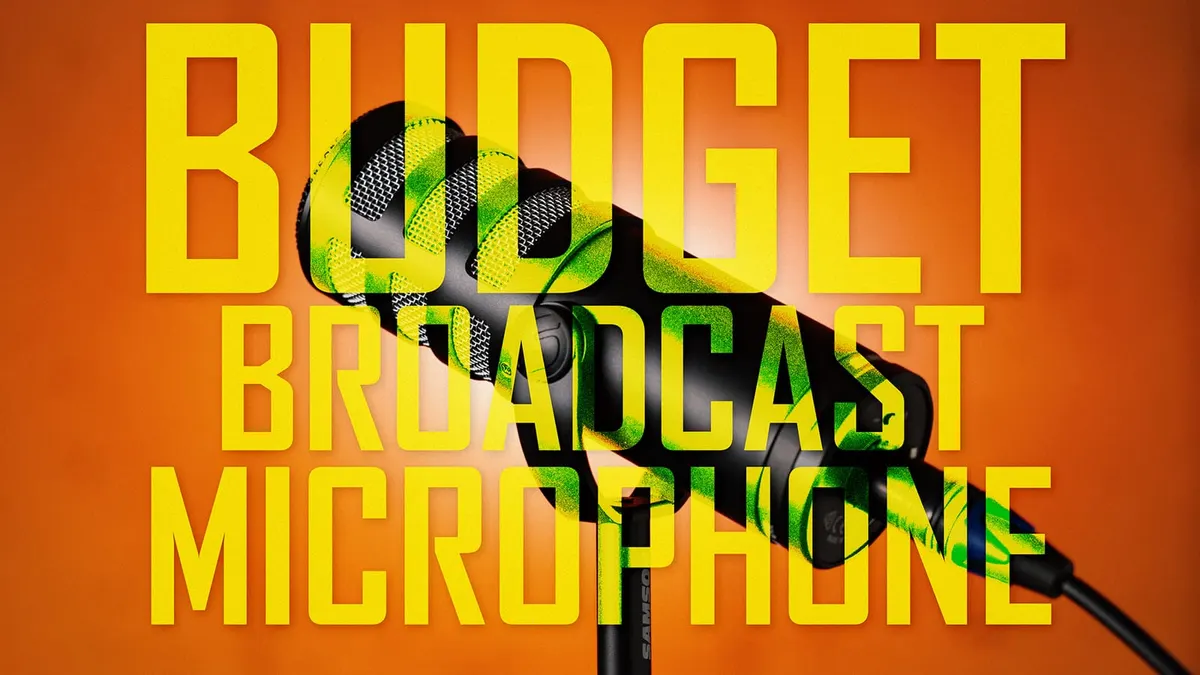
In this week’s episode, we take a look at and listen to the Samson Q9X budget broadcast microphone. This ergonomic podcasting, streaming, and studio microphone is a dynamic mic with a cardioid polar pattern, ample internal shock mounting and wind screening, and an inbuilt mid-boost presence effect. In this video we walk through the Q9X’s feature set, compare it to the SHURE SM7B and ElectroVoice RE20, and discuss how, when, and where you might use each of these three broadcast microphones. Let’s take a closer look and listen!
Check out our review of various audio recorders here. Check out some more dynamic mic options for podcasting and livestreaming here.
Gear used or mentioned
The links below are Amazon, B&H Photo, Sweetwater, or other affiliate links. As an affiliate, I earn from qualifying purchases.
- Samson Q9X broadcast microphone — B&H, Amazon
- SHURE SM7B studio microphone — B&H, Sweetwater, Perfect Circuit, Amazon
- ElectroVoice RE20 broadcast microphone — B&H, Sweetwater, Amazon
Read the transcript
in this episode we take a look at the Samsung q9x microphone which is really made for live streaming podcasting maybe gaming and zoom calls [Music] this entire episode is recorded with the
Samsung q9x which is what you see right here and I have that running through a
Rupert Nave design shelter Channel and then that’s running into my camera here which is a Canon c200 that’s the signal chain that you’re hearing and we are not going to do any sort of processing except for normalizing the audio levels to -23 lufs and the reason we do that is that’s a reasonable loudness without requiring any sort of compression or other effects to get it to that level now let’s get you some audio samples we’re going to compare this to two microphones that it’s really not entirely fair to compare to because they’re much more expensive but this is a broadcast style microphone and we’re going to compare it to two Classics the
Shure sm7b and the electrovoice re20 both of which are either 400 or 450 U.S versus 129 U.S and really the question is how does this compare to those much more expensive microphones let’s have a listen it was easier to know it than to explain why I know it if you were asked to prove that two and two made four you might find some difficulty and yet you are quite sure of the fact it was easier to know know it than to explain why I know it if you are asked to prove that 2 and 2 made 4 you might find some difficulty and yet you are quite sure of the fact it was easier to know it than to explain why I know it if you were asked to prove that 2 and 2 made 4 you might find some difficulty and yet you are quite sure of the fact it was easier to know it than to explain why I know it if you were asked to prove that 2 and 2 made 4 you might find some difficulty and yet you are quite sure of the fact it was easier to know it than to explain why I know it if you were asked to prove that 2 and 2 made 4 you might find some difficulty and yet you are quite sure of the fact it was easier to know it than to explain why I know it if you were asked to prove that two and two made four you might find some difficulty and yet you are quite sure of the fact it was easier to know it than to explain why I know it if you were asked to prove that 2 and 2 made 4 you might find some difficulty and yet you were quite sure of the fact it was easier to know it than to explain why I know it if you were asked to prove that 2 and 2 made 4 you might find some difficulty and yet you were quite sure of the fact it was easier to know it than to explain why I knew it if you were asked to prove that two and two made four you might find some difficulty and yet you were quite sure of the fact just quickly about the q9x cardioid polar pattern meaning its directional it picks up sound mostly on one side starts to fall off at the edges and then it rejects most of the sound from the back here’s a sample where you can hear how it sounds depending on where the sound is coming from first here’s what the q9x sounds like speaking directly in front of the cardioid Polar pattern zero degrees off axis here is 90 degrees off axis on the q9x and here is 180 degrees off axis only
Samsung q9x microphone it does have a yoke like many other broadcast style microphones in the body is all aluminum it does have an internal shock mount and here’s a little sample where Emma’s bumping the stand just to see how much of that transfers into the microphone oh foreign typing on my keyboard it’s an Apple keyboard let’s see how much of the sound transfers to the microphone the microphone has an integrated two layer Grille to it and the idea with that is to manage plosives plosives are the sounds that you get in a recording and a microphone at least when you say the letter P or B in particular it’s a little puff of air that comes out of your mouth if that hits the microphone capsule you’ll get this really low frequency sort of Boom sort of sound it’s not really Pleasant it can be fatiguing if you get a lot of those so let’s get you a sample of what it sounds like talking directly into the microphone and with the foam cover which should reduce some of that Peter Piper picked a peck of purple pickled peppers
Peter Piper picked a peck of purple pickled peppers of course there’s an XLR output so you can record into any audio interface or any audio recorder which has an XLR input it’s a dynamic microphone it does not need phantom power but it does need a lot of gain and so that’s a I think a really important thing to keep in mind is that you’re going to need a recorder that probably needs at least
I would say 60 to 65 DB of gain preferably 65 and that should be Clean
Gain this microphone will eat all of that up it will it will really need that to get a good strong level especially if you’re doing live streaming there is also a mid boost switch let me go ahead and switch that on right now so I’ve had it off this time so far and now the mid boost is on I’ll go ahead and leave the mid boost on my sense is that this microphone can sound a little bit Woofy um a little muffled if you don’t you if you’re using the foam wind cover and you don’t use that it’s going to differ from voice to voice so you just tune it to whatever sounds best for your particular voice but this is nice it gives you a little option
I usually have a fairly sibilant voice and this microphone doesn’t seem to emphasize sibilance like a lot of other microphones do so that’s a good thing but if you need a little bit more clarity in the voice doing that mid switching that switch to Mid emphasis will help with intelligibility a good bit the microphone design also evidently has a humbucking coil what does that mean it means that it should be pretty good at rejecting any sort of radio frequency interference that’s going to be Wireless signals from phones and other wireless devices here’s a sample of that let’s run through the pros and cons first of all Pros obviously is the price 129 dollars relative to the other two broadcast mics that we compared it to earlier a lot less expensive so that’s one of its biggest cons the mid boost switch which we already mentioned I think is a really nice feature as well to let you tune the sound of the mic to the particular voice that’s speaking into it so if it’s if you have somebody has a very very bright voice you might want to turn that off to give them a smoother sound but if it’s starting to sound a little bit kind of muffled or
Woofy you can add that mid boost and that will bring out some intelligibility some mid-range Focus this microphone has excellent self noise performance if you use a pre-amplifier with good self noise performance so it’s really going to be the preamplifier or the audio interface or the recorder that you use it’s going to Define that and again as I mentioned before you do need quite a bit of gain so 60 to 65 DB easily of gain is what you need for this and when we did that test in our very quiet recording space sound blankets all around brought the recording into post normalized it to -23 lufs and then measure the portion where we didn’t talk the quiet portion about five seconds worth what we found is that the noise floor sat at -72 DB RMS Max when we use the sound devices mix pre 2 recorder so it’s actually a mixed pre 3 Series 2 excuse me recorder so that’s a recorder with a very clean uh self noise performance metric and this mic without did great so just to give you a kind of a sense it’s not going to be the microphone that’s creating a lot of hiss and self noise it’s going to be whatever preamplifier that defines how much self noise you end up with if a chunky broadcast style look is what you’re into this delivers however personally I will say I prefer to keep it out of the front of my face that’s why we have it right here where it’s down it’s a little bit less imposing but whatever you prefer if you do like that kind of broadcast look to your microphones this one delivers the microphone does include the integrated yoke so that makes it easy to attach to a stand and it really kind of optimizes it for use with a either a boom arm or in my case I’m using a low profile boom stand
I guess it’s not really a boom it’s a low price profile stand and um the Yoke lets you position the microphone pretty much any way you want so it’s nice to have that yoke and of course it also comes with the foam so you don’t have to go buy that separately the internal shock mounting seems to prevent stand bumps from transferring too much of the noise of those vibrations so that’s a pretty good thing as well the cardioid or directional polar pattern helps pick up the sound you want and reject the sound that you don’t want so if you’ve got a fan and your computer running on the other side of the mic this does a pretty good job of not picking that up and then we also tested the RF immunity so when you get a lot of
Wireless activity near the mic how does it do overall it seemed to do quite well I wasn’t able to detect any sort of interference unless I put my phone literally touching the microphone then I got a tiny bit of buzz but as long as you’re not having your microphone and your phone touching each other while you’re recording you should be just fine alright no product is perfect let’s talk about a couple of cons and they’re just two that really come to me number one it can be a little bit muddy sounding with some voices especially with the foam cover on but I think the mid boost solves that pretty nicely and it solves it in a way that doesn’t add a whole bunch of sibilance as well so I think they’ve done a pretty nice job of voicing this microphone another potential con is that it does realistically require at least 60 but preferably 65 DB of very clean gain from your preamplifier from your audio interface from your recorder or whatever you’re plugging it into your camera so this is not going to be something and that’s that’s if you’re using the microphone within three to four inches so while the microphone is inexpensive that means you’re going to have to buy a more expensive or work with a more expensive pre-amplifier and there are quite a few out now that are much better to work with that do Supply 65 DB of gain and do it in a very clean way so the options are getting better out there but that is one thing to keep in mind and if you’re interested in recorders it might work well for that situation we have an entire video that talks about all sorts of different recorders I’ll put a link for that up here all right so what do I think of this microphone if you really want a broadcast style microphone I think this can be a good choice is it my very first choice I’ve actually more recently really enjoyed working with the Shure sm58 with a foam cover on it it’s not as impressive looking but I think it’s a microphone that works pretty well with most voices but again if you want the more broadcast style looking mic and you tend to have a brighter voice this can be a pretty good option I also like that this one does have that switch for either turning turning off or turning on the mid boost so you can kind of tune it for particular voices you don’t get something like that on a Shure sm58 or a sure sm57 so this gives you some more options makes it a little bit more flexible for different voices so overall
I hope that was helpful for you if you have any questions go ahead and leave those down below and if you’ve not already subscribed make sure you do that and we’ll be sure to get you more great videos on how to improve your Lighting and Sound for video talk to you soon [Music]