
Saramonic K9 Wireless Mic & How it Compares to DEITY THEOS
· Audio · Wireless systems · 4:22
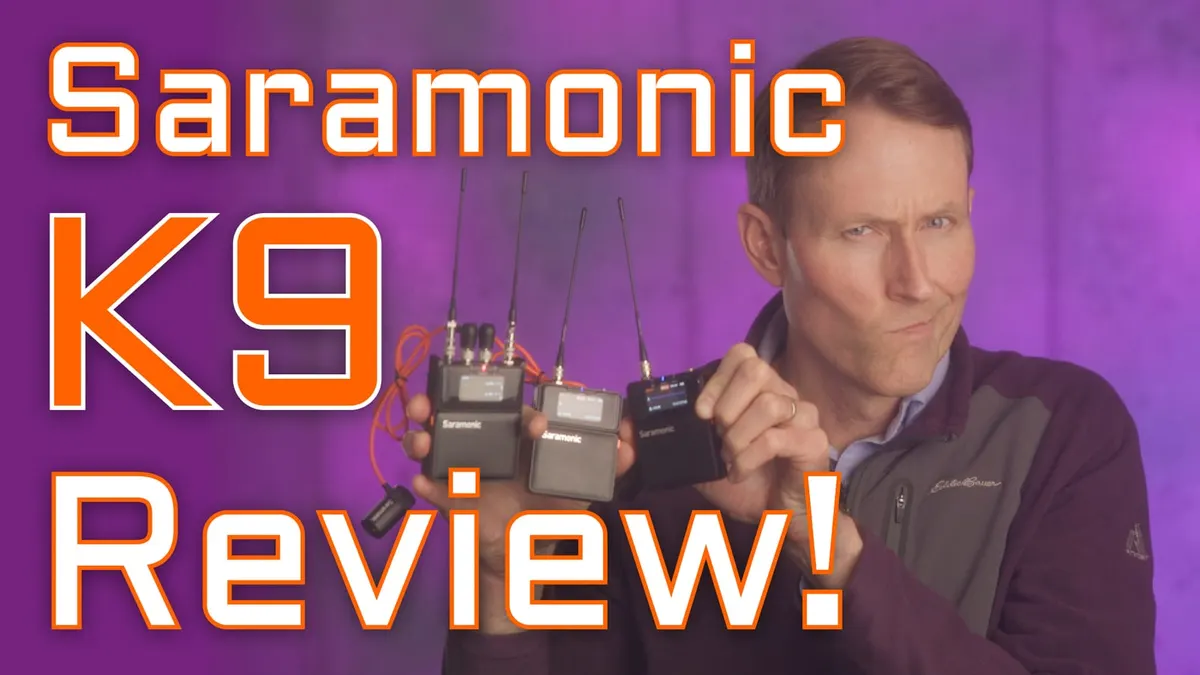
In this episode, I discuss the high-level differences between the new Saramonic K9 digital wireless microphone system and the DEITY THEOS. This is NOT a full review, just an audio sample from the Saramonic K9, and how it differs from the THEOS system — they have very similar feature sets and price points. I’ll work with the K9 system over the coming weeks and get you all the details on how it performs in a few weeks.
Gear used or mentioned
The links below are Amazon, B&H Photo, Sweetwater, or other affiliate links. As an affiliate, I earn from qualifying purchases.
- Saramonic K9 — digital wireless microphone system with TX recording and wireless timecode sync
Read the transcript
A brief first look at Saramonic’s new K9 digital UHF dual-channel wireless microphone system, whose nearest competitor is clearly the Deity Theos. Both systems record 32-bit float to their transmitters; in the US, patents held by another company prevent transmitting and recording simultaneously (allowed outside the US). Both have built-in timecode generators for jam-syncing with an external box before attaching that to a camera, both cover a wide 550MHz-900+MHz band (with the app checking GPS to show locally legal frequencies), both have iOS/Android control apps for timecode sync, switchable RF power up to 100mW, 3.5mm monitoring, and both ship complete kits (mics, cables, antennas, hard case) at just over $1,000 US.
Key differences: the Saramonic receiver has a screen showing signal, meter, and battery status per transmitter, which is convenient in a sound bag, but it is not an antenna-diversity system (more detail coming in a full review). Deity has a broader accessory ecosystem — wireless timecode generators that jam via the same app, a wireless digital slate, an RF distribution box, and external antennas; Saramonic currently has none of that, so jamming its transmitters requires a wired connection to a timecode generator. Both use SMA antenna connectors, so external antennas can be attached to either system’s receiver.
This is a preliminary first-hours-of-use overview from NAB in Las Vegas — a full detailed review and comparison with the Deity Theos is coming in the following weeks. Get out there and make some great sound, and we’ll be back with you very soon.