Sound for Video Session — Audio Exploration & Q&A
· Audio · General / technique · 1:06:21
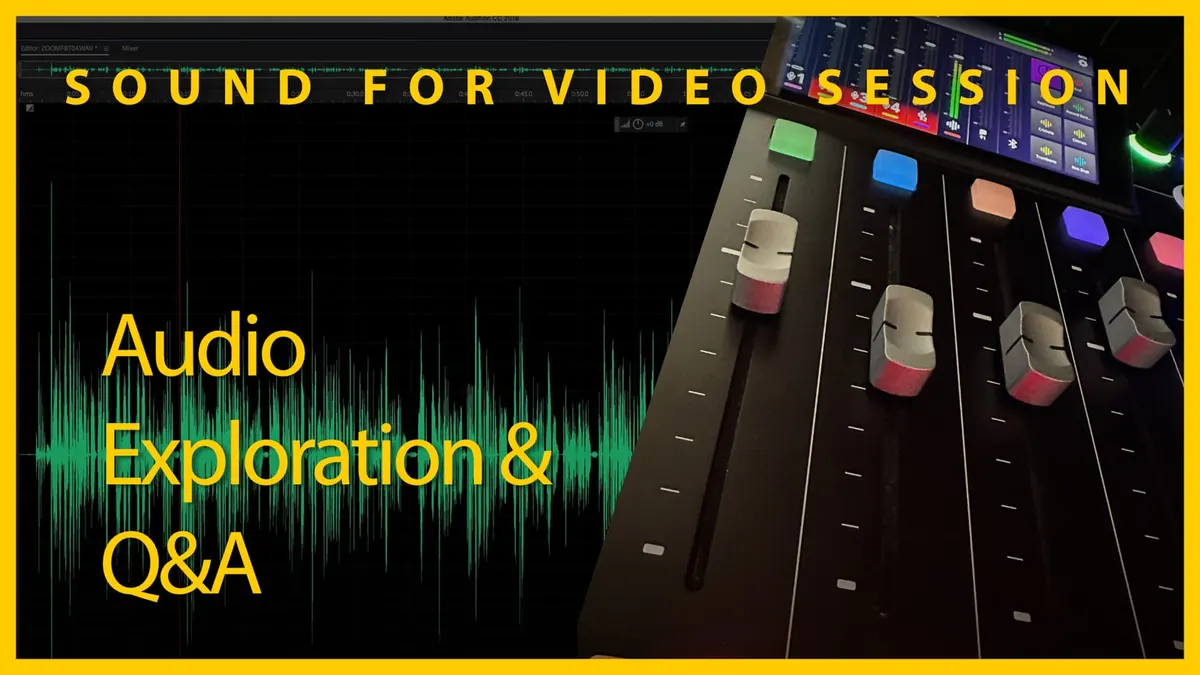
In this week’s session, we’re just going to explore different audio setups. And then we’ll answer your sound for video questions.
Gear I often use or that we mentioned in this episode. The links below are Amazon.com, B&H Photo, Sweetwater, DVE Store, Waves, or other affiliate links. As an affiliate, I earn from qualifying purchases:
Tagged: Signal Chain, Audio Gear, audio interface
Gear used or mentioned
The links below are Amazon, B&H Photo, Sweetwater, or other affiliate links. As an affiliate, I earn from qualifying purchases.
- Earthworks ETHOS microphone — B&H, Sweetwater
- Sound Devices MixPre II Series Recorders — B&H, Sweetwater, Amazon
- Panasonic GH5 camera — B&H, Amazon
- Canon C200 Camera — B&H
- Canon EF 24-105mm f/4 lens — B&H, Amazon
- B&H, DVE Store, Amazon — ATEM Mini Extreme & Extreme ISO
- Allen & Heath SQ5 Digital Mixer — B&H, Sweetwater, Amazon
- Rupert Neve Designs Shelford Channel, pre-amp, EQ, compressor — Sweetwater, B&H
Read the transcript
foreign [Music] [Music] foreign [Music] [Music] foreign [Music] [Music] foreign [Music] [Music] [Music] foreign [Music]
Welcome to our sound for video sessions great to have you all here today thanks for joining us from wherever you are joining it looks like we have people from um most of the Western World maybe Middle
East a little bit um great to have you all here let’s go ahead and jump on over to our agenda and we’ll take a look at what we’ve got going today audio exploration you might wonder what do I mean by that I um there I think it’s I think it’s valuable to try different things to try different setups and that’s we’re gonna we’re gonna do a little bit today in fact I have here today a completely different setup than we’ve well we’ve used parts of this setup before I can’t see Danny right now she’s over in a control room behind a sound blanket backed by the camera and what we’re doing here is we have for
Danny we have a a little light that she can turn on if she needs to alert me or or say something so we’ve got that back there oh she wants to say something here we go we have the Eastern Hemisphere represented too by at least Sri Lanka very good excellent so Eastern Hemisphere also represented welcome everybody all right um and let me let me show you what I mean by trying new things let’s go ahead
Danny if you want to go to the second camera here this is a little bit interesting here so we’re gonna I’m gonna move things around here but you can see kind of behind the scenes here for audio we’re using the road Caster
Pro 2 today that’s going directly into the streaming computer which is this one right here you can see we have OBS running right here this is the agenda here this is on an iPad we have the switcher right back behind there which you can see right there
I’m going to try not to make this to motion sickness inducing
I have a confidence monitor oh Danny has something she wants to say oh Danny if you can see your hand back there you see that wave again a little bit more this way there we go there’s your hand there’s Danny so let me just focus out a little better okay so there’s a confidence monitor right above that it’s a little bit difficult to see but there you can see the reflection of my face in the diffusion filter on the camera it’s sitting right above the confidence monitor there of course here we have a 4x4 scrim that and behind that we have an aperture light it’s lighting us from above behind actually let’s see if we can get this we’ve got light streaming in the basement which is putting light on the background behind me here uh Danny is sitting over at the control surface for the atem behind the sound blanket she also has the laptop with a with a chat on it so she can put that up on screen as well so that’s how we have things set up here today both of our mics of course are routed through the atem mini or sorry the road Caster Pro 2. that’s also how we played the intro music here so we have this channel is my microphone this is Danny’s this is the music right here and I have the music the start song loaded into this pad the end song into that pad and um this is feeding into the streaming computer that’s running this so you can see my levels right here on OBS so this is connected via USB to this computer and we’re just bringing that as in as a individual Source here the road Caster
Pro 2 for the only stream that or the only scene that we have set up here in OBS OBS is basically just acting you know it has an audio meter for me and then it also is the encoding app but all the switching is being done on the atem and that’s feeding in via USB into this computer as well so there’s our little mini behind the scenes look oh yeah microphones we are using this is the Earthworks sv33 on me and then Danny is using a Shure ksm-8 so let’s go ahead and switch back over to the agenda really quickly okay all right um the reason this topic came up for me is that yesterday so for for work we do some live streams we did a live stream last week uh live streams are are interesting because there are about a thousand maybe a million things that can go wrong and I I haven’t I’ve haven’t been looking at the chat here hopefully everything’s looking okay today um yeah hopefully everything’s coming through okay on the stream here but um there are there are just so many little things that can go wrong and in fact my friends photo Joseph and Aaron porecki are running or doing the streaming and the tech for a two-day conference it’s actually going on right now called resolve conf and that’s put on by sponsored by Blackmagic and uh what is his name I’ve forgotten the name of the guy that’s doing it uh Casey
Ferris is running it and then Aaron and
Joseph are doing the tech the streaming uh and sound for that and I I tuned in for the first few minutes of that yesterday and my heart went out to both of them I hope the all the things that I put in the behind the scenes chat were helpful for them but they had some very serious well not very serious as of audio issues up front where the audio was only coming out of Left Channel and it was like it was sitting way down there like the
The Meters were barely registering anything so everyone was having to crank their audio way up that was attending remotely uh so I pulled out audio hijack gave him the data said hey you’ve got 14 DB of
Headroom you can boost things up and so um they were using the same mixer for the room sound and for the stream sound and so they pushed I think they pushed the main the master fader up is what I gather they did but then the sound started almost feeding back in the room so I um anyway I think that what they did is they went into the atem and pushed the levels up there which makes a lot more sense so anyway they were able to get it sorted out pretty quickly but that’s just one example and the reason I say my heart goes out to them is because
I’ve been on live streams before where things didn’t go well I think some of you have been here actually when this live stream didn’t go perfectly in fact we had a period of time I think it was the end of last year where the atem we were streaming directly from the A10 minute just for whatever reason on my network it just wasn’t working it would go for just a few minutes and then it would start locking up so um lots of little things that can go wrong and so what I’m what I’m guessing
I’m advocating for here is a couple of things number one testing plenty of time beforehand uh and actually what we do at work is we do test streams so we actually stream privately to our YouTube channel and check that everything is going correctly there so that you know we can check the audio levels I can go into audio hijack with the Julian loudness meter and I can um you know just measure the audio levels at the end of the signal chain actually out on
YouTube that is the final destination in our case and so being able to check it there is really important because you may have everything for example doing great on the road Caster but you may not be realizing that your
Downstream gain staging isn’t set up correctly and so while it may sound great at the road Caster it may be clipping somewhere farther down the stream so really important to check those things and explore and learn what works and what doesn’t work and uh there’s a lot to learn so um those are the kind of things I’m referring to when I talk about exploring with audio is I think in and actually all of this AV setup all together um so cool all right let’s jump into some questions that we had submitted ahead of time and show you what we’ve got here a couple came in beforehand first from swengi and I hope I said that correctly when I send audio from the zoom F3 recorder to a digital camera like the
Sony a7r III or four is it better to set the camera’s Audio Level to the lowest setting I wonder if there’s a good way to find out the right output level or right input level excuse me so yeah usually I would set the cameras and put on cameras that only have a microphone input yes typically I would set it to their lowest setting and then I would use the output level of the recorder in this case here’s a zoom F3 you have the ability to adjust the output level on this and that was that’s what I would adjust so um let me just uh show let me see if I can do this on this little other the second camera here and get it give me just a moment here with the zoom F3 fired up okay so let’s go ahead and switch over to that thank you Danny um let’s go ahead and so small she says is that what you said stand by here we go go ahead that’s what
I said yes it’s so small it’s tiny that’s the idea that’s the big advantage of the zoom F3 okay so what you need to do is go into the menu and this is a little awkward here but let me just see hopefully we can show this to you come down to Output and then you want to choose the line out level okay so you have you can control the output level right here and what you’d like to what you should do here is press the tone turn the tone on okay so the tone is going to come out at minus seven at minus 20 I believe whoops this is the thing that um output line out level you can press the play pause button there we go now the tone is on so you can use that and that’ll send level just a tone to your camera when you have that 3.5 millimeter connected and then you can use this to adjust the output level so that they’re both showing -20 DB on their meters that’s that’s the general approach that you want to take so yes to answer your question you would generally set that to the lowest setting and then adjust the output level on your recorder and in fact Danny why don’t we switch back to the main camera here I want to just kind of talk about this concept a little bit it’s really important to learn how to calibrate the levels of your recorder if you’re sending audio from your recorder to camera you need to learn how to calibrate those levels and the first thing is that you need to [Music] um ideally your your recorder has a tone that it can send and usually you can set that to minus 20 DB and then you check the meters on your camera to make sure that level is coming in at -20 DB if it’s not then you adjust the output level of your recorder until it does show minus 20 DB on the camera as well the idea here is that you want the levels to be the same on your recorder and your camera so that so you say for example if you’re peaking somewhere around -5 on your recorder but you don’t have this all calibrated it could be peaking at it could be heating up against zero DB and clipping and distorting in the camera so that’s why it’s really important to calibrate the levels between them so that’s kind of a fundamental skill to learn and to practice so that you don’t run into the kind of issues that uh
I’ve run into before when I didn’t spend the time to go and do that calibration or that I think lots and lots of other people have run into before as well so definitely important to check that make sure your gain staging is correct or as good the same calibrated all the way through the signal chain same thing when you’re sending audio from maybe a road Caster into an A-10 mini same thing you have to calibrate those levels and make sure they’re coming in at the same level so you watch the meters on one and make sure they’re matching on the other so when you peek at -5 on the source maybe here in this case the road Caster
Pro 2 you need to be peaking a minus five on the downstream device as well in this case the A10 Mini so um just something that’s just practice it practice practice practice practice and you will never have a problem it’ll just become second nature for you and then you won’t run into those issues when you’re in the midst of a of an actual gig so or one of your own live streams okay back to the questions then got another one coming from Steve now this is where we’re going to do a little more exploration here because this is not an area where I have experience at least not a lot of experience but Steve is looking to record some [Music] um military aircraft that are probably getting close to their end of their life and wants to record them so that we have a history of them and asks this would it be better to record a separate stereo
Ambiance with say a pair of sm57s in XY configuration and a separate mono recording of the aircraft following it with the shotgun microphone as it thunders down the runway and then create the overall stereo effect in post or could I record mid-side with a coaxial shotgun microphone and sm57 while panning to follow the aircraft or would this produce weird phasing effects let me tell you how I would approach this Steve um
I think it I think it wouldn’t hurt to set up the sm57s in some sort of stereo configuration whether that’s X Y or a b or ortf or whatever you choose and then also do the follow with the shotgun microphone as it moves past you on the runway I think that’s a perfectly legitimate approach mid-side recordings when you say coaxial shotgun I’m not familiar with that term
I’m not sure if that means it’s a figure
I don’t think it’s a figure eight I think it’s just a directional shotgun microphone I think is what you’re talking about but typically for mid side you want a figure eight microphone a microphone with a figure eight polar pattern and that’s going to be picking up sound from the sides and then you have a directional mic uh Straight Out The Sound Source so the idea with this is that you can mix between the two of those in post and uh sort of decide how wide of a stereo field you want in post so you get the best the big advantage of that is you get to choose in post how directional or how stereophonic you want that overall effect to be so that that can work pretty well but I think you have to have a figure eight polar pattern mic and I don’t doesn’t based on the mics you’ve mentioned here
I don’t think you really have quite that setup if you use two sm57s for the side mics I don’t know if there are plugins in posts that would allow you or decoders and posts that will allow you to take three channels to create a mid side maybe probably there are I don’t know um but typically you use an um instead you use a figure eight single figure eight polar pattern single microphone for the side mics and then a directional mic for the front mic so in any case another person to contact and get some information on this would be Watson Wu Watson’s last name is spelled w-u he actually came on our live stream back in 2020 to talk a little bit about recording performance Vehicles which would be very similar to Jets from the standpoint that you are you’re stationary and the vehicle or the aircraft in this case is going past you on the runway um so in any case those are those are kind of that’s kind of the the mindset I would use is I would probably do I would set up some sort of ambisonic or stereo array on a stand and then I would also follow with a shotgun microphone and then figure out in post how you want to bring that all together so okay that is the questions those are those are the questions we had for today so we’re all good there do we have anything in the chat that anyone would like to talk about we do all right Alex Knickerbocker has a great video or two whoops where’d that go uh Alex Knickerbocker has a great video or two on recording military aircraft for film sound there you go
Alex Knickerbocker is another great resource uh YouTube channel here on
YouTube well of course it’s a YouTube channel uh Alex does a lot of post sound um for commercials and film and he um he also does some recording as well so he would have he would have some great information Watson Wu is the other one that I would definitely check out watsonwood did the sound recording he does the sound recording for lots of movies and for video games and he typically records um performance vehicles and he also records uh Firearms so he has a lot of experience recording those types of sound effects thanks for that like and sound how can I monitor a multi-camera setup in a podcast uh Moishy um uh I well I guess I would need to know more about the podcast I where what are you recording to so whatever device you’re recording to typically that’s going to be a mixer or maybe an audio interface or something like a like a podcast dedicated audio recorder mixer like the road Caster that’s where you would monitor the audio um now are you talking about video monitoring or audio monitoring I assume you’re talking audio monitoring and in our case here Danny and I are both connected to the road Caster Pro 2 in this case so that’s how we do it here other times when I have all of the audio maybe routed through other videos where we’re doing um sharing screen
I have microphone for me and for Danny and then we also have an app running on the computer that plays the intro and outro music in those cases I monitor from the A10 mini extreme it has a headphone output I actually run that into a headphone amplifier that has two outputs so that we can both monitor at the same time and that’s our program audio so that’s how we do it in the case of the atem mini extreme the A10 mini A10 mini pro and hm mini pro ISO do not have a headphone output in those cases what I used to do was I had a confidence monitor so I sent the output the HDMI output to a confidence Monitor and I plugged my headphones into that confidence Monitor and that’s where I monitored the problem with that is if you’re doing the talking there is a substantial latency which is to say it’s it’s somewhere in the realm of like half to one second so I say something and I don’t hear myself back for another half second to one second and it was really disorienting so you can use it to just make sure at the start everything’s working okay but you generally have to take your headphones off because you can’t if you try to talk while you’re listening to yourself without much delay or latency it gets really disorienting so really difficult to do that um so hopefully Moishy that gives you some insights on how to monitor in a multi-cam setup for a podcast so you’re not using the Pearl Nano today we are not using the Pearl Nano instead we are using OBS as our encoding
Appliance so it’s actually a Mac I’ve got an old Mac Pro sitting here under the desk running OBS and that’s doing the encoding today for us okay bangs naughty bits uh in today’s sm58 versus sm7b video you stated that you need 60 DB of gain minimum 65 DB or better to drive the sm7b you didn’t mention Ein which is in my uh my opinion more important why um yeah I mean there’s yes the equivalent input noise on whatever preamplifier you’re using is going to be important as well I would say that in because I limited the scope of the video to answer your question I could talk about that all day long as well um and there’s a there’s a lot to talk about when it comes to the inline preamplifiers as well there are certain cases where using an inline pre-amplifier can be enormously helpful there are also situations where using an inline preamplifier can actually degrade the audio in fact with the rode Caster
Pro 2 they recommend you not use one some people were just so used to the previous Road Caster with their sm7bs that they just went ahead and put the cloud lifters and the FED heads in between their sm7b and the road Caster
Pro 2 and they actually got worse results in terms of overall self noise so um there’s just a lot there and it was kind of beyond the scope of the video but yeah I mean it’s a it’s a fair point as well um what I was really focusing on in that video is that the sm7b is a great microphone I I like it I own one and I paid for it with my own money also the s1058 I think it’s a little bit um it gets discounted by a lot of people they just think oh I want an s7b and sm7b has some advantages yes but if you’re working on a tighter budget there are ways to make the sm58 work I think well enough that most people will get great results if they they work without and honestly if you’re talking about e
Ein equivalent input noise you’re probably with the same input you’re going to get better results most likely with the sm58 which requires less gain so anyway there’s some thoughts on that uh Steve said yes I meant uh to say a bi-directional mic for the mid side recording great advice thank you and thank you Steve for the the question and
I hope that you have a lot of fun making those recordings it does sound like fun use use some good ear protection um also another thing to consider with jet aircraft is that they’re extraordinarily loud so you’re going to need to work with microphones the sm57s will be great um they’ll just probably need some wind protection but microphones that can handle really really high sound pressure levels because aircraft those are craft engines of course are very very loud so when you do look for a shotgun microphone or any other side of uh whatever you’re doing to build out your kit there you’re going to need to be careful about that all right like and sound
LCR left center right array could work well for aircraft recording too it’s basically ortf but with an additional
Center mic two I assume Sennheiser mkh 8040s on the sides with an 8050 is a common option I think very good so there you go there’s another um yeah very similar I would say to uh that’s that’s kind of the idea of mid side but using three microphones instead of two cool Daniel updates for the online courses actually let me get a little history here so the reason we do these live sessions on each week is that I originally posted my first course online at school.learnlight and sound.com in 2015. and that was our production sound fundamentals course is basically how to record sound for video and film and one of the things I wanted to do when I first launched a course is I like online courses of course but the frustrating thing about them in some cases is that you don’t have an instructor you can ask questions of at least in many cases like a lot of times you buy an online course and that’s it that’s all you get um Good
Luck so uh what I wanted to do was have a means whereby people could actually come and talk and ask questions and so we started live streaming and um then since then I think we have a total of nine or ten courses now and yes we did Daniel we did update a few of them fairly recently within the last month or so the sound devices mixed pre and the zoom f8 courses have both been updated and the reason we updated those is that they both have received firmware updates and and in the case of the zoom F series there’s a new version of the f8 which is the f8n pro so we added a couple of additional segments for that particular recorder on the sound devices mix preside we added the the firmware had changed some of the menu layouts and so we updated some of the videos there in particular one on using the mixed prison audio interface and another one that was walking through the menu and doing some of the menu setup so we re-recorded some of those with the updated firmware so that everyone can follow along a little bit more easily so nothing fundamentally has changed changed on the sound devices side the sound devices mixed preside since they launched the sound devices mix pre 2
Series and we’d already updated those a couple years ago when those came out so anyway that’s what we do is we update the courses periodically those are the two most recent updates that we’ve made we also have a course for uh sound for live streaming we have a course for um well let me pull them up here I’m trying to remember what they all are so what I’ll do here we have one for the zoom F4 one for the zoom F6 one for the zoom f8 one for the sound devices mix pre-series recorders we have one for dialogue post processing and audition we have take a double check here um
I said F4 f8 all the f8 series oh we have a this one needs to be updated next is we do have a course fairlight fundamentals of mixing dialogue it’s a mini course that one needs to be updated that was recorded I think in versions uh three versions back now and they’ve moved some of the things in the menus and things like that so that one definitely needs to be updated as I mentioned Zoom F4 Zoom F6 sound for live streaming with the A10 Mini oh and then we also have our izotope RX course so that one will probably also be updating here before too long to reflect some of the changes that came with our
X10 version 10. not a lot changed there are a few things they have um a thing that actually takes the audio and converts the dialogue into text and you can select based on the text it doesn’t work really really well but I mean the selection part works well the translation hmm it doesn’t work quite as well and then there are also there’s a repair assistant which is very different in version 10. um seems a little bit more useful to me now but still um a little bit hit and miss in my experience so there’s that um yeah so there’s an update on the courses thanks for that Daniel okay from Brian I’m still in awe at the combo Cinema quality sound of the shore tl48 and the mix pre 10 2. yes that’s a great combination sound devices mixed pre recorder and the
Shure tl48 lavalier microphone it’s a good it’s a good mic for as far as lava layers go it’s one of my favorites glad that’s working well for you Brian
Jesse uh thanks for the live love your show just unbox the road Caster Pro for a few days and start using an absolutely amazing device love it so much I’m glad it’s working well for you that’s what we’re using here today the road Caster Pro 2 in this case we had the original as well which can work it doesn’t have quite as much gain on the older version and I think this one’s a little bit easier to configure the settings for the processors I think the the screens are a little bit more useful in terms of identifying not only odd you know from the sound that you’re getting but also visually what’s happening as you process the sound so glad to hear it’s working well for you
Jesse
Michael should I run my road Caster Pro 2 direct to my A10 Mini Pro or direct to my computer for streaming you can do it either way we’ve done it both ways today we’re going direct to computer other other times we’ve taken those line outputs or they’re actually called monitor outputs but you can switch them to line level and sent that to the atem mini um there are there are advantages and disadvantages if you send it directly to your computer what you will need to do is um you’ll need to provide an audio offset because what happens in that case is if you have an atem connected to your computer and you have a road Caster Pro connected to your computer both via USB the audio is going to arrive at the computer before the video arrives at the computer just because video is going to take longer almost universally so what you have to do is do a recording on your computer so for example if you’re using OBS you can do the recording right in obs and you just do a clap test so you just record yourself clap clap clap is what I usually do then
I take that recording into a video editing app and I go through frame by frame one by one to see how many frames off the sound is from the actual visual of the hands touching together and that’s how many frames Offset you need to apply in OBS to accommodate the fact that the audio is getting there before the video so in other words you’re slowing the audio down by that many milliseconds in the case of obs now if you connect your
Road Caster Pro 2 directly to your atem you may have to do a similar type thing the only difference is that the atem
Control software allows you to adjust the number of frames and so instead you do the same thing you do a recording with a clap test and apply an offset of that many frames in the atem so that’s how you’d approach that and then another thing you can do is you can run the road Caster into your camera so the outputs of the road Caster directing the camera in that case you shouldn’t need to apply any sort of offset because the audio will get to the camera and be encoded with the actual video footage and then sent to the item and it should be in sync already so those are kind of the three main options I see and those are kind of the I guess the advantages and disadvantages of each you need more cables if you’re going to send it to and you probably need to be they need specific kinds of cables with the road caster for example I have a video on the channel my main Channel Curtis Judd on
YouTube that shows the exact cable that you need because you’re going from a balanced output to an unbalanced stereo input so there’s a particular cable that you need you can’t just use any old cable so be careful and make sure you watch that if you’re going to be doing that and then depending on the type of camera you have if you have a camera with XLR inputs then you can run directly from the road Caster over balance cables into your camera and then if you’re using a consumer grade camera that has a 3.5 millimeter microphone input then you will have to convert from balance to unbalanced and we’ve talked about this quite a bit actually lately we have one of our live streams just a few weeks ago talks about interconnecting audio devices so definitely have a look at that if you’re going to approach it that way so those are the ideas I think once you get the dial the the delay dialed in for going directly to your computer that’s probably the easiest way fewest cables and you’re just applying a in this case for today we had to apply 160 milliseconds uh delay on the audio in obs and that could see gets everything back in sync the video and the audio in sync so 160 milliseconds we’re this is the stream is at 30 frames per second so that’s approximately one two three for about five frames so the audio came in about five frames before the video just to give you an idea so I would start there usually I find four or five frames is usually where most at least a my gear typically needs to be offset so hopefully that helps Michael okay teacher of teachers if dealing with many interviews for one film after doing the basics on each audio noise Etc would it be okay if not pro to balance all the dialogue to one track before adding music you can you can do whatever works for your workflow here is the downside of that from my point of view if you then have to go back and it depends teacher of teachers what app you’re using to do the mix if for example you’re using fairlight in
DaVinci Resolve um I don’t know that what the advantage would be of bouncing it down to a single track first what you can do is create a bus and collapse all of those other individual channels and then just have the bus showing in the timeline that makes it easier for you so you know where the dialogue is it’s just on this one individual bus as opposed to 16 tracks if that’s how many interviews you have um so there are other ways of simplifying it that I would recommend just because if you do have to go back it would be kind of a pain workflow wise if you had to go into a different project I’m not sure how you have it set up but that’s just one thought that I would have the only reservation I would have about doing that so but whatever works for you is I mean do what works you will make mistakes and you will learn but typically what we do for our posts for films like that where you have a number of interviews is we typically keep those all on separate tracks and you you know at some point you’ll balance them down to Stems where you’ll have a dialogue and effects and a music track but while you’re still working on it typically I don’t do that I wait till the end okay Daniel any new online courses planned yes uh come Thanksgiving so right right now at work we have we’re we’re getting ready for um the annual conference for our company so we we’re putting on what we call the webflow conf and um that’ll be on November 9th once we get past that I have some time off and so that’s when I’ll be focusing on my new course and stay tuned to find out what that’s going to be about don’t know yet but I’d love love uh requests if you have a specific request
I’m surprised one thing we’ve heard quite a bit of requests for is for the sound devices eight series recorders the 833 888 and Scorpio um that one’s always tricky to me because someone who’s buying a
I don’t even know what the Scorpio cost now the 888 when I bought it was seven thousand dollars it now runs over nine thousand dollars so usually my sense is that people to buy those typically already know how to mix and they’re upgrading so for them a course isn’t super helpful but I’ve had a number of requests for it too but if there are other specific either devices or topics that you’re interested in
I would love to know about that
Matt I will say from personal experience that Kurdish Judd audio courses are excellent thanks Matt I’ve run live sound for 40 years but getting into recording for video and the mix 362 it was very very helpful thanks so much Matt glad you found it helpful appreciate the endorsement there uh Keith took the mix pre-course also very helpful glad you liked it all right for single person talking head for indoor outdoor interviews
SDC small diaphragm condensers what that stands for by the way indoor shotgun outdoor what type of pull and stand would you recommend that might work well in either case well there are a few different options so the ones that I typically use Danny’s actually using it right now so it’s a it’s that we talked about stands uh probably three months ago four months ago five months ago but we did have a piece of one of our live sessions that was completely about microphone stands so I run through all the different microphone stands that I personally use um and the funny thing on that particular live session is that I brought up my most most affordable option which is one that I’ve had a mic stand that I had you know from Amazon I think I originally bought it for 20 or 25 dollars I think they now sell for 30 dollars but it’s uh on stage stands boom microphone arm stand and um it broke on the stream after I’d had it for well over 10 years I think I’d had it for 15 or 16 years so it was really maybe ironic but it broke right on stream um but then there are a lot of other things so typically what I do for those kind of for for interviews is I use a Sentry stand so I don’t have one of these top of the c-stand right there um but then what I do is I there are little holders you can put them in little hooks that hold boom poles and then I then I put my boom pole with the microphone in that holder nice thing about C stands is they can go up to about 11 feet so they go pretty high so you can get them over standing interviews as well as seated interviews they are really sturdy they’re heavy so that they don’t tip over as much you should still secure them with sandbags on the on the legs and um yeah just to kind of lower their
Center of correct center of gravity and make sure that they’re really stable but those are those are really good on film and video sets there are other options I have some that are less mobile here in the studio I have a latch Lake stand which is it’s got this massive uh cast iron base um it doesn’t move a whole lot I don’t need it to I usually just use that when I’m using a boom microphone over me here so those are some of the options definitely go back and take a look at that previous episode or that previous live stream to see that so if you just search for Kurdish Judd audio microphone stands on YouTube you’ll find that time for a sip of water excuse me okay back to Michael I’ll try the clap test
I’m using ecam that’s perfect yeah definitely use the clap test and ecam is perfect great little app I like it all right uh Santiago I have to uh to make a podcast using the zoom F3 and two rode nt5 mics cardioid capsule a rode ntg2 or Road go will be better for recording that thanks for your channel I’m from Argentina all right Santiago um
I would personally use the rode nt5s that would be my choice um the ntg2 requires a lot of gain and the zoom F3 will be fine with that but I would just probably use the the two rode nt5s that makes the most sense to me and what I would probably do in as much as possible is I would have the two participants in the podcast sitting on opposite sides and have the back of their mics facing the other person that’ll get you the best rejection also put as much space between them as you reasonably can that will also help in terms of preventing microphone bleed which is when when I talk into my microphone my microphone picks it up but also the other person’s microphone will pick it up the more space you put between people and when you use the directionality of the microphone its polar pattern to
Advantage by by placing the back of my microphone aimed at the other person that ends up helping quite a bit with that so those are some things to consider but I would probably just use the rode ntg or the nt5s um so no I would not use the mtg2 or the rode Wireless go to or the road go to whichever I don’t know if you’re talking about the video Mica or the wireless go but in any case either one I would use the F3 and the rode mt5s okay hi flow is there an affordable way to use VST plugins in live sound reinforcement that doesn’t need a computer not an affordable way that I know of um it’s you you generally require the higher end mixing boards to use plugins or you need a computer um
I mean I guess the road cast or something like a road uh yeah I mean if you’re trying to do live sound reinforcement I don’t I don’t know of a way the Behringer X error mixers have lots of processing built into them I don’t know if they have additional plugins you can use but usually have everything you need those are probably the least expensive um live reinforcement mixing boards or mixing racks depending on which one you get that can do that as far as I’m aware teacher of teachers yes just over a dozen tracks thanks for that feedback the issue is just my psychology no it’s not it’s actually sanity as well maybe that is psychology but um
I know when you get to a point where you have so many tracks it’s hard to keep pardon the pond track of them all but uh that’s why I think using learning how to use buses is really important at that point because you can bust all of your dialogue into one bus all of your sound effects into a single bus and all of your music into a single bus and then that gives you a way to control each of them independently not only down at the individual track level but also at the bus level and it also makes things less wild in terms of keeping track of all the different channels that you have there so it is definitely your psychology it’s everyone’s psychology but that’s what using buses can solve for you just make it a lot easier for you uh like and sound you can get Standalone devices that can be loaded with custom software patches that might do what you want check out the organelle oh very good thank you like and sound I’ve never heard of that so um the organelle
I’m going to make a note here sorry I just bumped that make a note here for myself to check that out or again now sound um that one might take some work to find images for organelle sound is there more is there more to do you know that the company is is named like in Sound by by chance is that crittering
Critter and guitari I think it might be
Critter and guitari it looks pretty cool it’s a little it’s a metal box with a bunch of what look like wooden buttons and then some potentiometers and a tiny little screen so interesting does do some processing but worth checking I guess thank you for that
Daniel says that the sound devices 888 it’s now 9 200 at b h and the Scorpio is eleven thousand three hundred dollars uh or sorry 11 500 for the Scorpio yeah so for me it seems like most people that are purchasing those already know how to use that type of thing
Matt says I have used the 888 until I would buy the course if you if you learn to mix pre and understand mixing you can figure it out but yeah there is are there that many 888’s out there yeah they’re used at the higher end of the industry so most people that are working with those know how to use a mixer although there’s plenty in the corporate video space I know that’s how I ended up getting my job with uh with webflow is that they needed a little help working with their sound devices 833 so uh like and sound if you search for organelle synth that will pop it up very good thank you for that
Steve do you have any recommendations for a good quality bi-directional mic other than a Sennheiser mkh30 beautiful mic but a bit too rich for my budget um by that I assume you’re talking about um a polar pattern a figure eight polar pattern mic a lot of ribbons have that but I don’t know if you want to take a ribbon out into the field to do something like that they’re very delicate relatively speaking um I don’t well there are there are some large diaphragm condensers that fit into that category I know there’s things like the
AKG c414 is in that category a lot of the large diaphragm condenser mics kind of at the higher end these are going to be rich too I don’t know what the mkh30 costs but a lot of them are going to be you know close to a thousand dollars U.S so that I’ve experienced although there may be some less expensive ones that also have switchable polar patterns typically that’s the case is they you can switch them between cardioid figure eight omnidirectional um sometimes wide cardioid versus Tighter cardioid and even in some cases super cardioid so that’s where I’ve typically seen that on the large diaphragm condenser microphones um again I check with Watson Wu see what he uh what he’s using when he sets up his stereo arrays it’d be interesting to talk with him he’s definitely got a lot more experience in that case in that that type of situation so all of my microphones that do polar figure eight polar patterns are either large diaphragm condenser microphones that are pretty expensive with switchable patterns or ribbon microphones and I wouldn’t recommend a ribbon microphone for using on anything other than a static stand so all right well I can sound I do wish there were more great figure eight mics out there it’s sad the Sennheiser hasn’t done an mkh 8030 yet so they have the original 30 but not the 80 30. yeah it’s just something that um it’s uh yeah it’s a tricky one because just not as many people use them so there’s not as much of a market for them and um that’s the tricky thing for those companies is that when they make when they develop a new microphone there’s those are quite first for a company like
Sennheiser there’s quite a bit of research and development that goes into creating a new microphone design at that level so it’s quite an investment and I think at some level they probably they do cost benefit analysis and decide I don’t know we already have the 30. let’s just stick with that word so that’s my guess don’t know for sure on in the case of Sennheiser I’m not speaking for them uh Matt Ruff requests a course on Final
Cut ooh that would be a departure for us um it is learn light and sound but
I do use Final Cut I was actually thinking more of to be honest it seems like more and more people are interested in DaVinci Resolve um and I wouldn’t do a course on how to edit and DaVinci Resolve but we would do a like a more expanded course in fairlight and how to mix in fairlight um final Cut’s interesting I use Final
Cuts specifically for
YouTube videos um if I were working on a film I’m not sure
I would use Final Cut maybe I would excuse me there um the reason why is that I’ve I’ve never found Final Cut to be great with audio in terms of actually doing a mix in there or getting audio out and round tripping to another digital audio workstation has never been as straightforward as I would like and that’s why I mainly use it for
YouTube videos because I have a music intro and outro and dialogue period And so it’s it’s pretty straightforward I Love Actually cutting in Final Cut it is super fast for me I can cut way faster in Final Cut than I can in Premiere or resolve and that’s why I still use it for YouTube videos but um anyway great I appreciate the input Mount we’ll have to think that through and maybe we talk about those round-trip workflows maybe that’s something all right I learned something new every
Sunday today bus learn how to use buses it’s really useful especially when you start mixing those more complex pieces alright your videos are awesome for people who only use mobile devices like the iPhone do you provide courses on sound editing microphones or both
I don’t have any courses specific to phones and the reason why is I don’t actually use phones for filming that much so not that they’re not good for that um but it’s just not part of what I do for my day job we are always using cameras in a studio and we’re not using phones we have a more sophisticated when I say sophisticated please don’t take that the wrong way it’s not meaning to be critical of phones I think there’s a lot of value for phones and phones especially in news these days super helpful and for lots of other things being really really mobile they’re super helpful it’s not the type of work I typically do so I don’t really have a lot of background on that and I haven’t edited on my phone or iPad really um but I appreciate the input maybe we’ll take a look at that at some point maybe it’d be great if there was a great
Daw on iPad at least I think there is actually a version of
Cubase I think it’s called Q basis I think which is probably the most serious digital audio workstation on mobile devices at some point we’ll have to take a closer look at that flow I have searched for about a week about mixer with VST support and found nothing affordable thanks for confirming that I haven’t missed any I haven’t missed something yeah it’s not well I mean when you say vsts to you might be you might think of it in these terms if you’re if there are specific effects that you need
I would list those out and there may be mixers that can do that uh with built-in effects so there are definitely things like the road Caster has let’s see um let me just check here we have a high pass filter a de-esser a compressor
A Noise Gate um the big bottom and RL Exciter are sort of like EQ then there’s also an EQ and there’s also panning so it does do a lot of the things that you would typically need to do with dialogue processing so if you have it sounds like maybe you have some really specific needs that you need um yeah in those cases you’re I yeah I think you’re getting up into more expensive stuff if you if you don’t want to use a computer then you’re getting up into more expensive stuff okay uh the new Final Cut Pro noise removal is really Nifty it’s like the RX dialog isolate yes we just reviewed that last week and yes we got really good results for removing steady state noise typically or relatively steady state noise for discontinuous noise not not so good but yeah for steady state noise like fans air conditioning heating hums and Buzz did pretty well surprisingly well and it’s super simple to use as one slider you click it on and one slider how much you want to do so it’s really nice uh key says yes more fair like please okay great Daniel I would buy an online course that delved deeply into fairlight okay great good to know thank you for that all right next question round trip instructions would be great from Final
Cut I assume you mean yeah it does require third party apps and a lot of cleanup uh it’s a lot of work um you can set up audio Lanes if you go to logic it actually it makes more sense
I’ve just never been on logic I have logic but I just don’t use it so
I don’t have a ton of experience with that so I don’t have a lot of background to share on that but yeah a lot with logic in particular it would be helpful but I assume Rag and Bone Puppet Theater you’re talking about Final Cut to like audition or I’m not sure but let me know interested to know what that what you’re looking for there
Twisted wave is nice on iOS and there is a Mac and web version Twisted wave good to know thanks for that bangs uh check out ferrite for iPad it’s pretty good okay ferrite as well thank you we’ll check it out voiceover Body Shop seems to think it’s popular for punch and roll for vo artists
I would want a denoiser like RX denoiser and a feedback killer okay uh yeah well feedback killer is you can approach that two different ways EQ or you can use delay and by that I mean not delay like a typical guitar delay or anything like that but a um in fact I think it’s it’s Behringer I think that makes the there’s a little device you can buy that provides a little bit of um it does the same thing like when we’re trying to offset um audio for video for live streaming like we were talking about earlier it does that same thing for live sound which tends to help with feedback as well so there are a variety of different ways you can approach that but um yeah Cedar DNX is not cheap it does a similar thing it does a real-time denoising but it’s not cheap not even close too cheap um okay so you’re talking about Final
Cut to audition round trip got it thank you for that registered a course on creating a bus in fairlight all right thank you Mark that makes sense looks like fairlight is a pretty popular option all right do we have any other questions out there Danny’s out there scanning the the chat what projects you’re all working on right now I’d love to hear what projects you have going sounds like teacher teachers is doing some mixing of a film I don’t know if it’s a short film or a full like a feature length film it’s pretty cool you’ll see how much work goes into those very soon if you haven’t already it’s a lot of work to mix a feature
Matt says I own it as well and I think I opened it once it made for creators not editors is what I’ve been told this is ferrite I assume you’re talking about okay by creators I assume you mean people that like film on their phone and want to be able to finish it on their phone as well
I think Ripple training has a course on logic and Final Cut Pro integration and editing thank you Michael
Ripple training does some great great training as well going to try and join a 48-hour film uh horror production very good my brother’s done a couple of those um those are fun so those are contests where a bunch of several different groups of filmmakers get together and they have 48 hours to make a film they’re usually given a prompt and like uh a plot device like a like a some sort of prop that they have to use in the film um and it’s a lot of fun it’s hectic but fun it sounds like so that that’s a great way to hone your skills and put together something in 48 hours it’s a good idea uh no Apple Logic okay oh you’re talking about Apple Logic got it okay got it Matt thank you for the clear okay back to projects Mark I’m about to do a bunch of interview videos single person at a time but 10 to 12 people audio and video okay that sounds like a lot of a lot of fun you’ll get that dialed in pretty nicely sounds like uh Daniel I need to work on training videos for work scientific instruments in particular ah very good very good we have um we make we make educational videos at work where I uh where I work and we also as employees we have to take the you know there’s mandatory training like um harassment training you know so on and so forth and it’s so funny to the new employees watch that and they’re like how come the how come the harassment training is so much worse than a lot of the great videos that you all do um in any case Keith is working on a documentary about African-American civil war reenactments interesting interesting thanks Keith um live streaming recording and doing posts on a 10 retreat very good that’s a that’s all all you’re doing like full everything it sounds like Rag and Bone Puppet Theater is working on a 45 minute murder story to stream to retirement homes very good taking the
Intrigue and the suspense to the retirement homes good for you that sounds like fun yeah
Andy is working on field recordings mainly nature soundscapes but anything that sounds interesting very good liking to get out and explore out in nature nature by the way that nature has such a calming effect um did a piece on that a few years ago that was really interesting where uh does I think I told you about it last week in fact where the scientist was measuring brain activity um for people that spent more time they sent some people on a white water rafting trip for a week and measured them extensively before during and after and at the end their brains were working very differently much more calm at the end
Mark just so you know I wouldn’t have been able to touch this audio work I’m getting without your instruction both here and the course thanks that is great news mark thank you so much and I’m glad it’s working for you sounds like a lot of fun for you as well all right well
I’d like to encourage everybody to get out there to explore try new setups that you haven’t tried before when you have the time don’t try something if you don’t have the time and you have a deadline you have to meet so be careful on that side too but do the testing you need to do to make the res to get the results that you need or if especially if you’re working for pay you need to test test and the more you test the more confident you’ll feel going into that gig so highly recommended thanks everybody for joining get out there make some great sound talk to you again next week [Music] foreign [Music] [Music] [Music] foreign [Music] [Music] [Music] foreign [Music] foreign [Music] foreign [Music] [Music] foreign