
Sound for Video Session — History of the SHURE SM7 with Michael Pettersen
· Audio · Microphones · 1:08:56
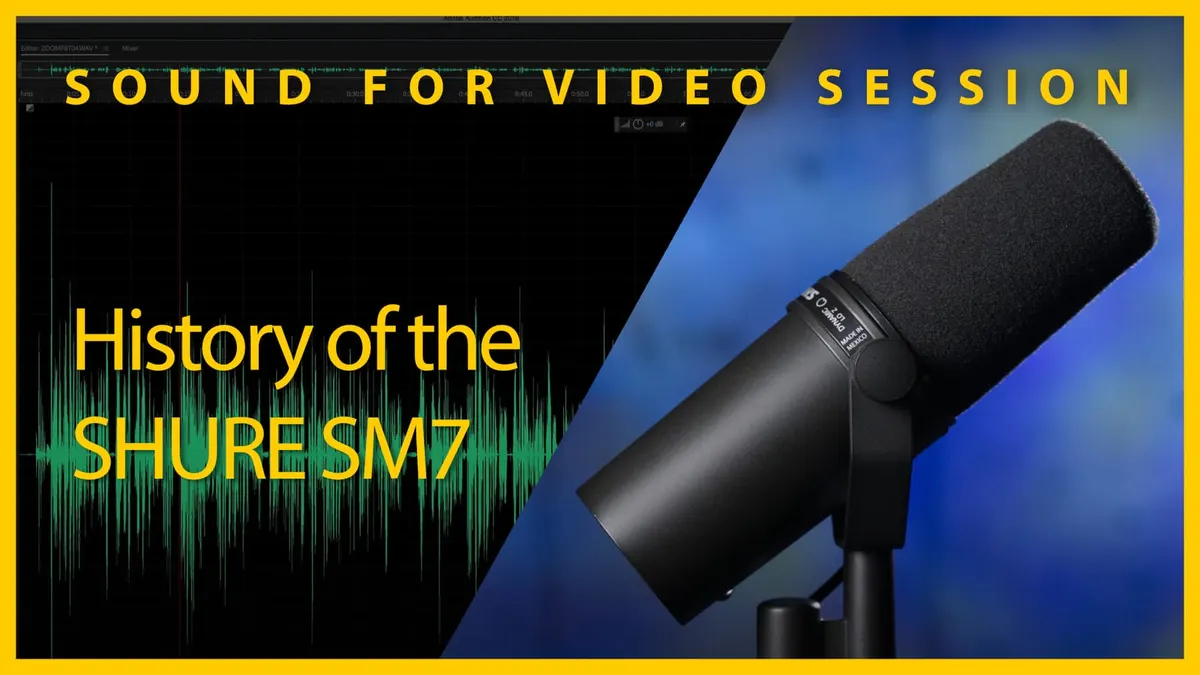
In this week’s session, SHURE’s historian, Michael Pettersen, joins us to talk about the history of the SM7 dynamic broadcast microphone.
Gear I often use or that we mentioned in this episode. The links below are Amazon.com, B&H Photo, Sweetwater, DVE Store, Waves, or other affiliate links. As an affiliate, I earn from qualifying purchases:
Gear used or mentioned
The links below are Amazon, B&H Photo, Sweetwater, or other affiliate links. As an affiliate, I earn from qualifying purchases.
- SHURE SM7B dynamic broadcast microphone — B&H, Sweetwater, Perfect Circuit, Amazon
- Sound Devices MixPre II Series Recorders - — B&H, Sweetwater, Amazon
Read the transcript
[Music] thank you [Music] foreign [Music] thank you [Music] [Music] [Music] foreign [Music] foreign [Music] to our sound for video session I’m delighted to have with us today Mr
Michael Peterson from Shore Michael thanks so much for joining us oh thank you for asking me Curtis I appreciate it you betcha you betcha um so we announced beforehand uh last week that we would be having Michael on here Michael is a historian over at Shore sure sure microphones has been in business for how long Michael uh well let’s see in the year 2025 it’ll be 100 years wow so coming up right really quickly on 100 years there’s a lot of history there today I’m using my
Shure sm7b um I brought out the rest of my collection here we have our sm57 our our 58 our ksm-8 uh much more recent Edition and of course I think a lot of people that follow the channel here know I’m quite fond of the twin Plex uh set of lavaliers so um but all of that aside uh what I wanted to do is that there’s been a lot of a microphone you see more today um in podcasts especially I think I think you start to see it a lot more and it’s been used a lot more in music um and a lot of other places is the
Shure sm7 and it’s gone through it’s it’s uh it’s not a new microphone which is the funny thing and so I’m hoping you can kind of walk us through um give us a little bit of history with that and uh we’ll have some time for questions a little later on great I’ve got a nice presentation all set up um we’re ready to go whenever you you want me to give you any background here though um yeah actually background let’s hear because you’ve been with Shore for a couple years yourself so tell us about that
I started insure in October of 1976 so
I’m on year 47 now believe it or not I’m still not number one in seniority oh wow the idea how many how long people stay around true but but I’ve been in sales I’ve been in uh marketing product management um I did some engineering work I started a department that I’m very proud of called the application engineering which is a department if you wanted to know what type of sure product to use or or how to use it you would call application engineering so I did that for almost 25 years and the historian thing came out came about almost accidentally I had I was interested in the history of the company and in 2016 I was looking to either retire do something new and president said why don’t you become a historian like our first historian and I was like yeah so I get to do research I get to do uh presentations like I’m going to do today
I get to buy old things off of eBay believe it or not we find things on eBay every now and that we need for the archives and I’m also involved in the philanthropic part of sure um a lot of people don’t realize this but sure is a very philanthropic company as a matter of fact we are owned by a trust which is held by all the employees so we’re kind of employee owned if you will but a lot of companies run it so that at the end of the year all the profits go back into the company or go back to the employees where ours go to profit go to the charity so we’re a for-profit company Run for the benefit of Charity that doesn’t mean we don’t get raises or anything else like that but the primary profits go back to Charities at the end and that’s how the sures ran their life and we continue to run the company that way so another reason for me to be quite proud to be there for so many years yeah indeed indeed and that and at the same time also producing some you know iconic microphones and other products as well so I think you you said you worked in product management at some point yep I did I did product management I was in the 80s I was our product manager for our mixer products our FP line our automatic voice act or voice activated automatic mixers that was something I was involved in as well I did that for about 10 years really enjoyed it it wears you out though it’s a stressful job a fun but a stressful job indeed indeed well with that why don’t we jump in and talk a little bit about seven I think a lot of people are curious to know um where that uh you know where uh oh did we looks like oh there we are still there yep I’m still here sorry about that okay no problem all right we’re all good all right let’s let’s jump in and take a look at that presentation let’s see if I can share my screen you tell me if it comes up yep all good there there we are all right one one quick drink of water here and let’s do the history of the Shure sm5 which some of your viewers aren’t going to know about but it’s very important the history of the sm7 so for decades you know the five and the
Seven have been very popular for voice over work you know that TV radio film recording and podcasting but they both use What’s called the unidyne 3 mic element that debuted in 1959 so the sm5 and the Seven are kind of grandchildren of the unidyne one and the unidine two so before we get into how the sm7 came about I’d like to explore the ancestry here’s the unidyne one model 55 1939 probably the most famous microphone we ever made people around the world referred to it as the Elvis microphone it was the world’s first unidirectional moving coil dynamic microphone done with a single capsule you could do it with dual capsules before that but an engineer what you’re going to meet in just a minute did it with a single capsule and this was a huge breakthrough and it was really sure his first big hit so in March 1939 we introduced the unidyne model 55 along with a ribbon microphone called the model 50. check out the price of the unidyne it was 45 dollars that would be 965 dollars in 2022 currency so it was not an inexpensive microphone by any means so the the genius who invented the unit phase Network the uniface network is the acoustical principle inside the microphone that makes it directional and this guy invented this one who’s only 24 years old and I want you to meet
Benjamin B Bauer born in 1913 in the Ukraine and before he was even 60 years old lived in the
Ukraine Poland England Cuba came to the
United States at age 16 to go to college in New York and also learn English at the same time this guy was indeed a genius in fact when he died he had over 100 patents to his name so here he is in 1937 and this unit phase Network Not only was so important to sure it’s also used pretty much by every directional microphone in the world now the IEEE which is a worldwide organization identified the United as a key invention of the 20th century in 2014 we received this lovely plaque from IEEE number 137 awarded to Shure for the unidyne microphone so if you’re not familiar with the unit with the Milestone Awards and many people aren’t they’ve given out less than 250 of them over the past 50 years so they don’t give them out too often but other Milestone awards are given out were for the breaking of the Enigma code during World War II the Apollo 11 moon landing the invention of stereo sound
Nikola Tesla’s research and one of them is for the sure unidyne microphones so we’re quite proud to have received this award here’s a page from Ben Bauer’s notebook 19 November 19 1937. these notebooks are kept locked up in my office as they’re so valuable for us and this is the day where he first described the uni phase acoustical concept I like this line at the top the following Arrangement seems to offer possibilities indeed it does and I hope you can see my cursor here but I’m circling the actual electrical equivalent of the unit phase principle and when I got to this page when I first had got these notebooks I just like stopped and had to take a break because this was so momentous of a page for us in fact that sure we celebrate November 19th uh every year as unifase day here’s what the first operational unidyne microphone looked like of course it’s a prototype doesn’t look like much but it did do what Bauer wanted to do it was a unidirectional moving coil microphone and to power it up he stuck a horseshoe magnet on the bottom but that’s really how crude this was we have all of his prototypes in the sure archive so we went from an industrial design prototype that’s what the you know unidyne was going to look like to the actual manufactured version in two years and of course that’s what it looks like today you ever wondered though what’s the inspiration for the unidine appearance most people particularly not in our industry recognize the microphone They
Don’t Really Care what’s inside of it they recognize what it looks like on the outside well here it is the front end of a 1937 Oldsmobile Coupe 6. looks just like that doesn’t it interestingly enough Mr Shure was a
Oldsmobile customer now we don’t know if he owned this exact model but he might have owned it or saw it in the the
Oldsmobile dealers lot looked at the front of it and said hey that would make a pretty cool looking microphone it’s Christmas time I’m sure all of you will see sometime on television the Christmas story where Ralphie gets the
BB gun for Christmas well there’s a famous scene where the car breaks down they have to change it flat look really closely at the front end of that car it is that same model and when you see his father and him changing the flat if you look in the background you’ll see the grill on this Oldsmobile 1937 Oldsmobile
Bauer created the insides who created the the outsides well is this gentleman here sitting down at the front named Wesley sharer excuse me just a little early for me to be talking here
Cher was not a sure and brothers employee he was an industrial designer that worked for us and so he designed the way the uh unidine looked here he is here’s Mr Shure who started the company and back here is Ben Bauer after Wesley stopped being independent the designer he went to work for play school and for the rest of his life he designed school toys for play school here is the most important pattern in our history it is from 1941 it is for conversion of wave motion into electrical energy that’s basically the patent for the unidyne you see a drawing of the mic element there’s the diaphragm here which was made out of aluminum here’s the side view and here’s that same electrical diagram that I showed you back from 1937. you may note that his name was bombswagger he changed his name from bomb zwanger to uh Bauer in the summer of 1941. because we were building products for the military and every time the military came to sure to look at what was going on they would say bombsweiger is that a
German name so he got tired of that and eventually changed it from bombsweiger to Bauer 12 years after the unidine one came out we brought out the unidyne tube excuse me just for a second another drink of water so I can clear my my voice absolutely no worries the interest interestingly it looks uh we’ll come to this later I’m sure but the you can buy a microphone that looks very much like the unidyne 2 uh today yeah the super the super 55 exactly yeah so this is this is 1951 and television was getting big and television said the internet one is too big it was a smaller version of it and so we bring out the unidyne 2 in 1951 and it’s about 66 the size of the unidine One S by the way stands for small isn’t that original it became very popular quickly and here’s 1952 we had the microphone that needs no name it’s an interesting ad because the sure name is not anywhere in it just the the look of that microphone became just World known worldwide and so we ran an ad like this so in the 40s and the 50s the udem one and even dine two were very popular for live sound here’s Elvis Presley using the unidyne one and he was photographed with a so-off and that is often called the Elvis microphone and here’s Frank Sinatra using the unidyne 2 he first sang into the unidyne when he was the singer with the Tommy
Dorsey Orchestra and tattoos
I don’t have unidyne tattoos by the way um but I’ll just give you a second to look at this I’m gonna have another drink of water uh yeah that I didn’t expect that Michael I’ll confess um wow Curtis if you just do a Google search sometime Google image search you just put a unit microphone tattoo page after page about that wow and wow as I noted once I’ve hit a trade show Once the guy came up and showed me his unidyne tattoo on his right arm and the polar patterns on his left arm and the frequency response on his chest
I like working there but I’d never done that okay so u91 1939 you’re dying two 1951 you know down three we bring out excuse me 1959 we bring out the unidine three this is the model 545 50 at the time and now you talking to the end of the microphone rather than the side but the concept the unit phase acoustical principle is still inside of that microphone I just want to note that the we didn’t use an XLR connector back then we used what’s called an amphenol connector so he saw Bower before here’s a person that developed the unidyne 3 his name was Ernie sealer he was trained by Ben Bauer he worked at
Shure from 1953 to 1997. and a key benefit of this unidyne 3 was that by having the microphone spoken into the end of it he had a much more uniform polar pattern and this polar pattern uniformity basically translates into louder sound without feedback and so we had the right microphone at the right time as a rock and roll grew and sound systems got louder complete accident but sometimes you’re just the right place at the right time an interesting Ernie hated rock music he really he really he was he was never comfortable with the fact that his microphone was basically led to loud rock and roll here’s the Beatles in 1965 they’re using a 545 microphone this is for their tour of the United States um they were Pioneer users of the 545 of them and the Rolling Stones were also early users of it but I just like this here’s the biggest band in the world and if you look really closely you can see that the foam windscreen is held on by a rubber band boy have things changed since then now Ernie wanted the frequency response of the unidyne 3 to be flat above 1000
Hertz and this this polar this presence
Peak this Rising frequency response he thought it was a flawed he tried everything he could do to get rid of it but he never could but interestingly enough it’s that presence Peak that gives the brightness and the intelligibility to the unidyne 3 and so his flaw basically became the signature sound of the unidyne 3 mics so Ernie did he he created the microphone but this gentleman here Bob Carr created the SM line of microphones which we’re going to talk about today so
SM stood for studio microphones we were trying to get these microphones into radio and television and recording studios at the time Electro Voice and
AKG were really the strong brands in the studios so we took microphones that we already had and we made put a darker non-reflective finish on them we added XLR connectors we we uh made them balance and low impedance and if they had an out of switch we got rid of the switch or we hit it by a plate in 1964 we brought out the line the first line of SM microphones and sm5 33 50 56 and sm76 if you look back here you’ll see an interesting microphone this is called an sm-3 this was their ribbon microphone that was to compete with RCA but we never brought it out but we do have a couple of examples in the archive so Bob was the guy that came up with the concept of the SM microphones so in 1964 we introduced the sm5 studio microphone again SM stands for studio microphone the initial target market was for overhead boom use in film and television but it eventually became a popular on-air radio microphone but look at the price 220 5 again the boom microphone ignores everything except the dialogue again we were trying to have this as a boom microphone not it on air mic and it really didn’t do very well as far as a boom microphone goes so from 64 to 69 five years sm5 struggling to begin establish as a boom microphone but other unidyne 3 mics notably the 56 57 and 58 we’re becoming really popular for live sound reinforcement at rock concerts and by the way sure was kind of unaware of this this kind of happened without our knowledge 1964 we brought out the sm56 this is the one we don’t make anymore but you can look it basically looks like an sm57 with a shock mount and a stand Mount added at the bottom of it not a reflective gray finish XLR connector front plate pretty much everything that we mentioned before 65 we brought out the sm57 of course we still make that today uh Curtis showed you his earlier I had a price of 63 dollars at the time you know interestingly enough it’s not that much more expensive today we know it’s a great on stage microphone for snares and drums and guitar amps but it’s also been used by the White House communications
Agency for every president since Lyndon
Johnson in fact the White House communications agency owns over 400 sm57s and there’s never been a failure of any of the microphones you’ve owned since they started buying them back in 1966. um one of my jobs at sure was for 25 years I was the liaison to the White
House for sure if we ever want to I can do another seminar on that that’s a whole other story and the back stage life of microphones and audio at the White House is it’s a pretty interesting detail in 1966 we brought out the sm57 sm58 now no matter what you read on on the internet what anybody has told you the only difference between a 58 and the 57 is the ball Grille that is the only difference inside it is a unidyne 3 engine so it is probably arguably the most popular microphone and lifestyle worldwide now but it was not a hit for our first year we sold 145 microphones for the entire year in fact we didn’t sell a thousand microphones until 1971. looking back a lot of people think wow what a great microphone it was an immediate hit it actually took about 10 years to establish itself but you know 145 units the first year believe me everyone was disappointed with those results in June 1967 there was the Monterey Pop
Festival in Monterey California and all the microphones on that stage were the sm56 this is the first major Music Fest to feature sure as the microphones a company called McCune sound in San Francisco basically had bought 50 of these sm56s and they used them for all the Rock shows that they did they use them for the vocals they used them the mic drums these in the mic amplifiers that was pretty much it and so here is the opportunity where Hendricks and Joplin and The Who and the birds they all come to Monterey and they’re all using these microphones and this was really one of the first things to established sure as the microphone for live sound for rock concerts as a matter of fact in our archives we have one of those microphones this is an sm56 that was used at Monterey Pop and other California festivals you can see here’s Hendricks with his you’ll notice that red badge right there and there’s that same Ridge band that says Harry
McCune sound and down here it says
McCune number 43. now we don’t know if this was used for hendrix’s vocals or on his guitars or whatever but we do know it was on stage and if you ever visit the sure archives we’ll let you take a look at it he might even let you handle it so 56 57 58 starting to gain acceptance for live sound sm5 not doing anything so what do we do well let’s introduce a third sm5 so we introduce the sm5c basically it’s the same microphone but now we’ve got 100 Hertz high pass filter on it and that’s basically get rid of low frequency noise as it’s moved back and forth on a boom uh didn’t do very well but take a look at this look at the front end of this thing does that look anything like maybe that the current sm7 well you’re going to find out why so 1970 now six years after introduction sm5 is not doing very good it’s a moving coil dynamic microphone the only way to get more output level is to basically put a more strong a stronger permanent magnet or increase the length of the voice coil wire both of those huge engineering efforts so even if we doubled the sales project cost didn’t make any sense to us but we found out interesting that people were using the sm5 as a close talk on-air microphone because when it’s close to your mouth you don’t need about you don’t need that extra output but far fewer were sold from the outside world than I imagine so here’s my question to the audience and I’m sure Curtis at the audience can’t ask is I’ll just ask this question to you okay during best sales years of the S5 how many units were told in Seoul sm5a sm5b has some 5Cs how many were sold in one year by the way the radio world thought it was hundreds of thousands what do you think Curtis how many do we sell in one year the best year ever uh let’s say 5 000. oh good good guess how about 250. oh wow barely one a day and the reason was that radio stations were the primary customers and sm5s didn’t wear out or stopped working and all they had to do was replace the windscreens huh so this was a this is a microphone that filled a need but there was no replacement need anyone for it so we we stuck with it for 24 years and in 1988 we discontinued the sm5 at it was 586 dollars at the time but now we’re gonna go back to 1969. so sm5 was expensive the manufacturer some customers thought it was too loud and we were going to make a smaller low-cost model and it would be named the sm7 so in the art of 1972 we bring out the sm7 the sm7 was a variation of the unidyne 3 sn57 element the sm7 element and the sm57 element are very similar I’ll tell you later about the minor differences are inside the sm7 there was a isolation
Mount that was based on the a53 M rubber donut the Yoke Mount was a variation of the sm5 about the only thing really new in the sm7 was the Industrial design here’s the first flyer for the sm7 this is from 1972 1973. the first units were actually sold in 1973 and look at the cost 256.80 that’s 1830 in today’s money and today you could buy an sm7 brand new for around 400 bucks I believe but the primary Market is voice over not overhead boom use so that’s what we’re going after now is voiceover features of the sm7 most of your custom most of the people listening probably have one so I won’t spend much time on that you got the frequency response
Tailoring on the back you got the suspension mount a really good pop filter uniform carb wheel cardioid pattern and there’s no output
Transformer and that minimizes hum pickups when you’re in a room that might have electromagnetic fields in them here’s the sm7 the mic element which is four points a very unique resonator which I’m going to talk about a little bit later it’s a funny story about that resonator humbucking coil here here’s the Airfield rubber donut and this added rear acoustical chamber extends the low end that’s one of the differences that the sm7 does not have that big added acoustical chamber at the back back here’s a guy who I worked with Jerry place he was the microphone development engineer from the 60s and the 80s 1960s and 80s and he designed the outer appearance of the sm7 now he was not an industrial designer he was a microphone engineer but he sketched out what the sm7 was going to look like when they and we said yeah let’s keep that there’s the design patent 1974. utility patents this is not utility patents utility patents cover how a product operates design patents cover how the product looks so this is a design patent for the sm7 given the
Jerry price in 1974 and pretty much for 26 years from the sm7 remained unchanged and in 1999 we made a minor change we brought out the sm7a the differences was there was a slightly difference in a mounting the mic mounting yoke that was changed that was to make it easier to manufacture and we added a better humbucking coil because in the late 90s radio stations which used a lot of sm7s we’re starting to replace paper copy with copy that came up on computer screens so the microphones were now being placed very close to CRT computer monitors and sometimes that created a hum or a buzz in the microphone so we had to improved the humbucking coil that’s the only difference between the sm7 and the sm7a so7b came out in 2001 and the only difference there is we added that larger foam windscreen and do you notice how much that looks like the front of an sm5 that was on purpose because there were some radio stations that just were every
NAB show they would oh you guys are so stupid to get rid of the sm5 that was the greatest greatest ever so we thought what if we made the sm7 look like an sm5 and would people buy them and the answer is yes they did so from the 1973 to 2008 sm7 was sales were relatively stable it was an average selling model it wasn’t poor enough to discontinue but it was good enough to keep it in line and then 2008 podcasters discovered this microphone now it’s 35 years old and podcasters oh one of the sales are going up and then 2015 online
Gamers discovered the sm7 check this out now this microphone is going to be 50 years old next year and now annual sales are 100 times greater than the sales in 2000. it’s just astonishing wow just astonishing yeah what what what what is what a story I wonder if Apple’s ever gonna have a product like that oh never mind so now let’s let’s have some fun looking at photos these are notable users uh uses of the sm7 and by the way I have to say this for legal reasons these are for educational purposes only and none of these people are endorsers of sure or as products but they do use it on TV uh there was a show back in the 1990s this is really about the first time I ever saw the uh sm7 on television there’s a show called Northern Exposure for some reason uh they never put the windscreen on it uh and if you look really closely here they basically took a 3.5 millimeter Jack and stuck it into the XLR system looked like a head of cord on it but that was the first uh television exposure I ever saw of the sm7 uh there is on Netflix there’s a show called dear white people this is a
Marquette Richardson uh it takes place in uh I think it’s her Production Studio and here he is using an sm7 radio Wolfman Jack was very big in the 70s and 80s he was an sm7 uh user as a matter of fact this is his personal sm7 and he would carry it with from Station to Station when he would go around the country Robin Quivers is still on uh with Howard
Stern here she is with Sirius XM she’s using an sm7b you can tell by the larger windscreen there and the NPR national public radio for the show 1A uses sm7s for their voice overs in the recording studio most famously
Michael Jackson used the sm7 for
Thriller and most of the other albums he did with Quincy Jones uh here he is with
Quincy and Michael Jackson and that large windscreen by the way is a Neumann pop filter that was carved out to fit the sm7 we didn’t have a filter that large for it
Mick Jagger has also used it most of
Jagger’s vocals are done with sm7s they usually record him like they show here with two microphones you’ll see there’s a condenser microphone I think it’s annoyman hanging above there and sm7 below it and they double track them and then during mixing they figure out which of the microphones produces a better sound on the track and so many times a lot of the Jaeger microphones are excuse me tracks even to the stay are sm7s and this is a fairly recent thing this is actually during covet when Willie
Nelson was doing live streams from his recording studio in his house uh and there he is with an sm7 and I think that’s one of his relatives in the back with an sm7 as well podcasting uh here is Bruce Springsteen and President Obama ex President Obama doing a live podcast they each have an sm7b another podcaster Anna Faris with her show unqualified with an sm7 without the large windscreen and uh Mark maroon again with Barack
Obama on his podcast WTF and they each have there’s actually uh sm7 here an unused sm7 here and then there’s another sm7 in front of Mr Obama and president of uh Apple and this I I want I I point this I have to say this by the way this sm7 shown in the photo still is operating perfectly with a 1.0 firmware that we put in 1972 so Apple take a take a listen from that uh if you if you blow this up real carefully look but check this out big one of the biggest companies in the world right they put tape over here so you couldn’t see the sheer logo in tape here you see that come on guys sure enough geez yeah yeah I know but yeah grow up okay so let’s finish up this portion of it I’m going to go through some very frequently Asked ask some seven questions and then we’ll open it to the audience what does unidyne mean well we first used that in 1939 for our single element moving coil dynamic in a directional microphone so it has multiple meanings uni is a single mic element but it also means a unidirectional pattern and dine is equals a dynamic microelement but it’s also a unit of force that used in the Acoustics so we just shove them together we came up with the term unidyne and we were granted a trademark for that in 1916 it’s a trademark that is still active can a singer damage the sm7 with excessive sound pressure level no no no no no no no you can’t damage an sm57 either you can’t damage an sm58 either and the reason is is that the maximum
Excursion of that diaphragm is less than the tenth one one thousandth of an inch that’s how much it moves maximum and basically if someone sings so loud what happens is that you can’t see me out loud by the way the diaphragm hits the pull piece it doesn’t move any farther so no matter what anybody says oh I got so strong of a mouth mouth I could blow out my sm7 you can’t do it uh you know was uniting three patented yes it was in 1966 and here is the patent drawing for the unidyne 3 mic element for Charles Ernie sealer of course this is for the and this is the utility pad and this is how the product works and this is the inside of an sm57 there’s the diaphragm it’s or the actual cartridge itself and this simplified acoustical analog right there it is the same as you saw in the 1937 drawing from
Ben Bauer that’s how long this idea is and it’s by the way it’s still used today so do the seven and the 57 use the same element they are very close to being the same element but they are not exactly so the sm7 diaphragm it’s got the same shape and the same size of the 57 diaphragm but it’s not as thick and it’s more flexible it’s more compliant and this helps with low end the 57 voice girl employs thinner wire and has three times as many turns as the sm57 and the resonator which is that front part that covers the diaphragm is custom now but for many many years for probably 20 years we basically took an sm57 resonator sawed off the front half of it and that became the sm7 resonator now the sm7 has its own resonator but that you know the sub manufacturing work hey we could use that let’s just saw off the front so we literally had a step that took a 57 Grille saw it off the head front and went on to the 50s on the S7 it’s not a secret but I think it’s kind of funny what’s the origin of the sm7 model number there’s a sequence we had the sm3 ribbon microphone that we introduced then we hit an sm5 then we got some seven um we have used sm1 and two they were model numbers for on-ear headsets from the 1980s we’ve never used sm4 sm6 sm8 sm9 but we do have of course current models ksm-8 and ksm9 so we’ve got some room to slide some other model numbers in there if we want uh the origins of the frequency response switches well believe it or not we already had products that did that we had these inline tubes that were about four inches long XLR and XLR out uh they were passive and they basically did exactly the same uh function as the switches on the back of the sm7 so all we did with the sm7 was steal the circuitry from inside of these problem solvers and put them inside of the sm7s chassis in the back with switches that you could turn them on and off so again we stole from ourself to make the microphone a little more versatile and some a little more trivia uh as you know that the Mike element is set well back from the Leading Edge of the foam windscreen and this helps reduce close-ups and pee popping and also helps to attenuate approximity effects so that’s one of the reasons that we’ve done that um it does not have a Transformer inside of it that’s the listen hum pickup from nearby lighting and other devices that emit an electromatic interference field and the new motive mv7 is named for the sm7 big surprise there by the way I’m using an mv7 now today and here it is if you haven’t seen it so it’s the great grandchild of the
United model 55. um it’s really a cool microphone because not only does it have a dynamic element it’s like it’s not a unidyne 3 but it’s like a unit N3 and a cardioid pattern but it’s got an XLR output on it which you can use as an analog output and a
USB output at the same time and you can use them at the same time if you wish and also get headphone output as well so it’s it’s uh it’s a it’s a great microphone so guys and ladies here it is 2022 49 years after its debut and it’s more popular than ever that’s just a surprise to everybody including us and I a user sent me this quote about a year ago I worked in radio for 36 years and the best microphone I ever used with the shear sm7 nothing else was close well let’s close it out on that I will put up my screen about if you have questions and comments we’ll help help them live now take them live or if you want to email me later this week or today Petra
M at sure.com and with that I will stop sharing and come back to you Curtis all right
Michael thank you so much that’s uh they’re so fascinating story there um yeah I’m I’m curious um um oh that the question just slipped my mind um we’ll come back to that but let me there are some good questions here in the chat I wanted to um yeah just kind of bring a couple of these up here’s one let’s go ahead and add this here with the sm7b’s explosion of popularity in recent years what specific measures has sure taken in the Mike’s manufacturing to meet that incredible demand that’s a great that’s a great question Paul it’s been difficult so so imagine you’ve been buying the same part from suppliers you know we’re in a similar right we don’t we don’t make the case we buy the case and like that and you come to them and say yeah yeah you know we know even some thought I’ll just picking that we’ve been you’ve been buying a thousand can you give us a hundred thousand though so so number one it’s been difficult on our suppliers number two we’ve actually helped some suppliers hire more people our people like that and uh in Juarez Mexico which is where we’ve had most of our manufacturing since 1985. we actually leased another building just to build sm7s so it’s a great question it has been a huge problem so you know the whole and of course and Supply chains and so forth with them so believe me our operations people have really been stressed with this so working hard great question great question it sounds like this guy might have worked in manufacturing he seems to understand that so yeah so we have a separate facility now I think the interesting thing is I think everyone’s aware of that now uh having gone through the pandemic and and you know there’s audio gear that you still can’t get right today in 2022 that you’re still having including from us we just we just can’t get the parts yeah good question
Paul yeah here’s one from Shoji um let’s move that down there how has the or has the sound of design of the sm57 changed over the years in any way no very very little um the concepts are the same what has changed of course is materials so we buy glues from people we buy Plastics from people we buy wires from people and so forth those companies don’t always stay in business so we’ve had to change things as as the things as our suppliers change as well but we keep what are called lab standard microphones we keep them basically in a sealed off and so forth and we go back and we check those against it so when we make if you have a microphone that moves thousands of an inch if you change that diaphragm weight or anything else even though it’s slightly spit it’s going to change the sound of it so we have to the we come up with new prototypes and
Designs we go back and we test them against the the lab standards to make sure that they have stayed the same we would be absolute idiots if we decided to change that type of successful format any any folks remember old Coke New Coke remember when Coca-Cola yeah we’re going to improve this we’re gonna we’re gonna improve the formula and the world went nuts we’ve got old Coke we do everything that we possibly can to keep it sounding like old Coke now that doesn’t mean that if you buy a brand new 57 and an old 57 they’re going to sound the same because for example the o57 it might have a buildup of moisture and spit and dirt on the diaphragms that’s not a fault of that that’s just where um and you know it’s like guitars you know there’s a 1953 Telecaster sound as good as a 2022 Telecaster well the 53 has been used all this time and things can change about that but the basic specs and so forth yes they’re they are the same and so they they have not changed very cool um this one you may or may not be able to to share a whole lot of detail but they’re curious about the contract with the White House communications agency um so I guess maybe the question is uh how did and I’ll ask the question back how did sure first become associated with the White House communications agency is because there is no contract is that what the question is you think well yeah I think yeah if you could just talk about that relationship because I know you were Central to that for many years well but but I didn’t I didn’t make that first Contact so that started that contact started around when um Lyndon Johnson came into the office one of the things that his staff members realize with that you know this is the president United States he always has to look and sound good and particularly because there was more television coverage going on so they decided to form an organization called White House communications agency that would make sure that the way this the the lighting and the cameras and the audio and everything else would be standardized so that means that they’re going to standardize on microphones at least there was so people at White House communications excuse me started calling me calling manufacturers in the United States they call Electro
Voice they called sure they call it static and here’s who we are and you know can you help us out well here was the mistake that our competitors made the competitors were so excited about this that they said to the White House communications agency yeah and we’ll give you all the free microphones you want can’t do that with the government that’s a bribe what you can say to the government is we’d love you to use our stuff uh we’ll help you here’s the places where you can buy it we will give you training we will give you great support and so forth but we are not going to give you product and we never have given them products they about everything and because of that that’s how it first started and they’ve been loyal ever since that is yeah really interesting so um and and the funny thing I mean an sm57 is 100 U.S today um and it has been 100 U.S for how long a long time decades yes probably yeah decades exactly yep so just amazing there yeah um it’s a great mic for that choice but for that use by the way yeah yeah and and also um can you speak a little bit to the popper stopper as well so there’s a little there’s a dedicated foam cover that you’ll see on the presidential Podium yep um it’s a little bit different than you see for other mics it’s not it’s not something it doesn’t just slide on and stay there by friction it has a little bit of a taller tell us about that that’s called the it’s called the a2ws accessory to windscreen that’s what it stands for uh it does have a collar that you basically put a set screw on there and that set screw is put on there so that you can make sure you have a spacing between the foam what you want is you want foam air
Grill you don’t want to take the the windscreen and shove it all the way down if you ever do that by the way you basically you got a piece of foam in front of it now you’re not getting the pop protection so that collar allows you to position it properly and put a set screw on there so it doesn’t change and get shoved back down on there now you’ve also seen for uh there’s also called an a81 WS which kind of looks like a Nerf football and that’s actually made for our sm81 microphone but you can force it onto an sm57 and it gives you protection up to like 30 or 40 miles an hour in
Wind so those are the two windscreens that are used interesting so good stuff um there here’s one that you probably can’t answer directly but it might make for some interesting conversation um Tom Katie says there any chance sure makes a reissue of the original sm7 I prefer its sound over the currently of the available sm7b well there are no differences I mean it’s it’s this it’s still a uni phase I mean the differences that have changed have been have been perhaps minor changes in materials which we can’t go back and recreate because our suppliers don’t make them anymore um the way the microphone works acoustically is still the same um Tom you may have a microphone that has just got picked up some interesting characteristics over the years as far as spit and everything else that comes on there but there’s there’s no way to go back and recreate it we haven’t changed anything except for the materials that we’ve been forced to change because the suppliers aren’t there anymore so the answer is you can’t you can’t go back and recreate it and there hasn’t been any changes except for those materials and we only change the materials when we get forced to change materials because of the suppliers yeah yeah and then use the reference microphones to make sure that you’re still within right so on and so forth yes so so if you’ve got a special sm7 take good care of it because if you send it back to our service department they’re going to give you a new one all right um this is an interesting one I don’t know if you have insight into this so why did they decide to separate the XLR connector from the main unit and have it attached via a permanently attached cable uh it’s for vibration and isolation it’s uh so you get vibrations which come up the cable they don’t go into the microphone itself so that’s that’s why you have that separate okay got it makes sense makes sense another one what vintage your product are you Michael’s still trying to find for the archive well there’s I have a great white whale um we’ve I’ve got pretty much one of almost everything even though even though I found something last week on eBay it was a variation of a crystal microphone and by the way when I got it it was New Old Stock from 1939. unbelievable wow bag box microphone worked perfectly but there is one thing
I would love to have and I’ll tell you a story about it so in 1935 we made a high-end Studio condenser microphone
I’ve got that it hit a power supply I’ve got that but there was this way cool art deco stand that it fit onto so imagine a thicker mic stand than normal and at the base of it there was a stepped enclosure that kind of looked like the Empire State Building and you would hide your must your power supply under that oh God it’s so cool I only saw one of them and that was at a microphone collection up in Milwaukee a guy named Bob pacquette who passed away a few years ago had a mic collection that had to be 5000 microphones six thousand microphones maybe it was the most amazing private my collection I’ve ever seen and he had one and I was like
Bob if you ever want to sell it no no
I’m not gonna sell but but when I pass away there’s going to be a note on it that to call you so Bob passed a few years ago they found the note they called me up and I said well I’m yeah we’re really interested in it um what do you want for it I said well we had an insurance adjuster came on here and they appraised all the microphones and he appraised the microphone stand at twenty five thousand dollars
I said
I disagree with the the with the appraisers that just the appraisers appraisal um thank you very much if you get I said if you can get twenty five thousand dollars for it grab it so that’s that’s the one thing I I would really like and then some other things we don’t the heartwarming thing about this Curtis is that we’ll get people like there’s a lot of people now uh and grandpa dying off he worked in
World War he was in World War II or something and people go into the attic and they find these things and they’ll contact us and they usually come to me and I always help them out you know what if I know you you’d be you would be it warms my heart because some people say would you like it through the archives we’d like to we’d like to send this microphone home and so we have this lovely collection of products which were owned by people used through their lifetime that have now come home to rest if you will yeah sure yeah and it’s just it’s I don’t know what it is about microphones maybe because it’s so close and maybe because it’s voices and song and so forth but there’s this connection to it and many times we get things donated to us which we will we will take if we if we need them um and with us a personal story with it as well and and we also have by the way we also have in the archives all kinds of stories of microphones that have been through fires and dropped from helicopters and floods um the the most recent one um we’ve got one that was in the remember hurricane Harvey which was 2017 in Houston where Houston was underwater for like four weeks there’s a kick drum microphone that was underwater for that entire time dirty icky water and when the water is seated they took the thing out in the backyard hosed it off dried it in the sun and used it at the gig that night and and they sent us a photo I said you want a new one I’ll give you a new one and change that so so we have this collection of we call them sure survivors yeah and the and the oldest one is goes back to 1949 it was a unidyne one that survived a fire uh at a theater in Texas so wow wow I I mean I I have to I have stories I mean every every musician a touring musician in particular has stories of I’ve been to venues where they pull out a box they’ve got you know 15 of 15 sm58s in there grills are all mashed in literally you know there’s a joke people say you know you could use an sm58 as a hammer and
I’m pretty sure some of them have been used and I think I think that’s part of it Michael is that when you you know when people discover this say for example in an attic after a you know one of their relatives has passed away these these feel I mean they it’s it’s not like any other product you buy today the heft of to them is you know it’s substantial it’s not like it’s not like a little piece of plastic and you know solder and you know a couple wires it’s it’s like a yeah it’s so it feels like it means something I don’t know maybe I’m just getting Nostalgia no no if you allow me to allow me to tell you why that is that is on purpose so first of all the name of the company is Mr sure’s family name yep it’s not Universal microphones it’s not American microphones it’s his family name and that was really important to him and when we started building um military products during World War II 1942 1942 we went from 100 people to a thousand people in one year to build headphones and microphones for the military and of course she had to build things to military spec now because if the sm7 there that uses now
Curtis fails you’re going to be angry but no one dies yeah um if you if you if a microphone a ship or a plane fails people may lose their lives so we had to set Building Products to military specifications when the war ended Mr Shear looked back and said you know this military spec stuff it cost us more up front to do research and the product and the the actual materials record require more money as well but on the back end the stuff lasts longer people are happier we get fewer returns we’re going to build products consumer products to military specs and we still do that today yeah and that’s why that’s why you run into this and that that is specifically and we still do that you know that’s that’s how we still make all our products and that’s why they last tell us a little bit this is one thing that you and I got a chance to talk about just a little bit but the um the twin Plex and the duraplex lavalier microphones that kind of carries over into that that philosophy very much carries over into those yep yep um you know we’ve we’ve never really been big uh in theater
Lobby theater mics in production a lot of Air Max it just wasn’t something we targeted so we started doing some research in it particularly as our wireless system started to get more use for it and the biggest complaint we heard from all theaters is that I’m paying two or three or four hundred dollars for these labs and they’re disposable and this costs the theater a lot of money so we thought if we could come up with something that was durable that would be a way to probably win some of that market long term yeah we wouldn’t sell as money because people are not disposing of them but again if it comes out and says sure on it people are not expected to be disposable that’s just not what the brand means so we took about five years with the twin Plex to come up with a cable because the cable is a huge breaking point or failure point in Lobster theater and for production and we worked with a company that makes uh cables for medical products because again if those fail someone might die so that’s where we did that so it took us about five years to make those products and they um we got instead of 10 000 flexes out of them we got a hundred thousand flexes out of them for example uh so that was one thing we changed and the other thing we changed was that we found out that a lot of microphones get thrown out because they get Caked Up with makeup right makeup and sweat and stuff like that so the twin Plex have these little removable caps so that they get Caked Up and you just take those caps off and you replace it with another cap so that’s perfect example um and I think eventually that will probably be successful with that because people start realizing that yeah maybe I pay a little more up front but long term
I don’t have to replace these things every three or four weeks yeah so there’s there’s an example that’s yeah that’s a good point and not only that but the those caps uh help tune the frequency response to some extent as well so you have that additional benefit yeah throw these plastic caps away but I can get you know I can get new ones to fix my sweat and makeup issues and I can also yeah tune the sound give me more high-end response or less someone’s real sibilant you can roll it off like that and so exactly um I have a question this is very selfish um but I’m gonna I’m gonna ask the next question you said that there was an SM 3 that was developed but it was never released right why not um it was expensive to make okay um and RCA really had a Stranglehold on a ribbon microphones for Studios back then and it was just that as we and at the time it wouldn’t would not have been a microphone that you would use for live sound because it’s a ribbon microphone and as we started talking to television and radio people for this and showing it to them there was no advantage you know it was it it sounded as good as a as a RCA it was probably as expensive because they were expensive to make and there was no reason for these companies to switch and and by the way also a lot of the television and radio stations were RCA TurnKey installations where everything was RCA yeah and they were like well why should I why should I buy this it just sounds as good not better and so consequently small Market um no we had no competitive Advantage we couldn’t offer it for half the price just never brought it up got it okay makes sense makes sense here’s a good one uh someone wants to know where how does one visit the shore archives and where are they ah well uh first of all they are in Niles
Illinois this is our headquarters this is where we’re at uh it’s not quote unquote open to the public because it’s not a museum um if if there’s some industry contact uh that the person has we ask the question for example you’re tight with assured dealer um uh or you know one of our sure reps or something it can possibly set that up but if we open it up to the public that’s all we would be doing and it is it is a working facility I mean it’s in this it’s in the part of the building where we’re doing all of our development of products and so forth so it’s also a lot of confidential aspects of there I will tell you this though here’s something you can do if you’re really interested in what we’ve been talking about there is this two volume 400 page sure history book that’s out there uh and I see him on eBay all the time for about twenty to thirty dollars and it’s if you just do an eBay search um or or or also like a Libras or any of the used book stories like you know uh I think it’s just called uh do sure you know sure and then like sound people values something like that but uh that’s probably the best way because there’s great photos from the archives and you can look at it at your own you know at your own pace uh it’s a cool book okay cool I’m very cool um another question here from Shoji off topic sure my question does sure still make phono cartridges we do not so we made them from 1937 to 2018. now I’m going to answer that I know what everybody’s thinking oh final’s coming back let me let me let me tell you the real truth in 1970 500 million vinyl LPS were sold in 2021 25 million vinyl LPS are sold so it’s not coming back to that level the second thing is that as the demand for phono cartridges fell we kept having fewer and fewer and fewer suppliers so for example in the 1970s we had 10 different suppliers with diamonds that we could buy from when we got out of the business in 2018 we had two suppliers of diamonds and what we found is that the suppliers that we bought from were not interested in building phonograph cartridges anymore because it was a dying market and the products that we were getting from them were poor quality and so we were building a hundred cartridge cartridges for example and rejecting 50 of them we couldn’t do it yeah so we just basically just said okay it’s time to get out it’s time to say I wish you still made them but they remember us in a good way as opposed to building them where you’re putting crap out there and then people say oh you guys used to make good stuff and so forth so it wasn’t an easy decision but just to also help you with this Curtis when I started it sure in 1976 photo cartridges were 60 percent of our business wow when we got out of it in 2018 photo cartridges were one half of one percent so yeah so largely business yeah business decision got it um so this is maybe one you can’t answer directly but maybe we can help helmet here uh what kind of foam was glued over the capsule the original beta 57 with the solid striped
Grill mine’s all dried out and I’d like to find a replacement it’s it’s it’s called open cell foam I I wouldn’t be able to tell you how many cells per inch there are um but you can find open cell phone do a search on uh you know on Google to find some help with cell phone and then probably this is just a guess you’re probably looking at 30 to 50 cells per square inch as far as what what the spec would be um but another thing you could do is you could buy a foam windscreen that goes on the outside of the microphone and cut a little circle out of it and glue it on that way and then that way you would be getting you know the that but but he’s right about that but foam is a foam is a pain in the butt it’s great for windscreens but they all deteriorate they all deteriorate yeah that’s the reality that’s physics um just a couple more again I don’t know that you can answer these the future looking products but this is a the super 55 so talking about the super 55 that’s that’s very much looks like I think it looks closer to the unidyne 2 um but it’s a modern microphone and it uses the unidyne 3 capsule is that correct um yeah you’re close it basically it it is indeed it’s the unidyne II Outer housing based upon the 1951 design a little bit a little different on the base uh it it uses a variation of the beta 58 capsule it’s kind of like it’s kind of halfway between unit and three and a beta 58. um the reason it’s blue is because that was the color of these the the uh the it wasn’t the phone back of the material of the cloth that was in it in 1951 so it’s a throwback to the 1951 look um any chances of being
I don’t I can never see it’s not going to add them to yeah I’ve not seen I’ve not seen a super 55 around the office with black foam in it there was a Pitch
Black Version called a super 55 PB that we that the entire thing was black the the casing was black and the Chrome inside was black that was available in 2018 I see him on eBay every now and then they’re stupidly high priced um but uh not to my knowledge no one really complains too much about the the blue foam but if I understand thing this customer would like to see an SML super 55 with black foam instead of blue foam
I’ll pass it to the product manager tomorrow I’ll see him he’s just not too far from me and say hey the people are looking for that good question yeah I think that didn’t they have a special edition with red phone yeah you’re right black black outside red foam and in fact it’s still used by the lead singer for Metallica that’s his that’s his uh that’s his that’s his still his onstage microphone yeah okay good good well why don’t we finish it out right here with one last question what is sure’s goal for the next 100 years stay in business [Laughter] okay you know it’s it’s funny that the company is 25 25 times larger than when
I started there uh and the the the biggest Advantage we’ve got just for all you folks is that we’re private we’re privately held and and you know we don’t have Wall Street saying where’s where’s our quarterly profits and so forth and so some of your uh listeners may be familiar with our Axiom digital system which is really an astonishingly
Advanced wireless system yeah that took us 10 years to develop and we had our own chip made for that if you’re if you’re public you’d have people say well what do you I want I want my profits I want my I want my quarterly aspect of you know give me that and you can’t do those long-term things so I think the fact we’ll probably still be in business 100 years from now because we are private and we don’t have those type of pressures we can basically look yeah it’s gonna take us five or seven years to do like the ksma Curtis that took us almost six years to do that uh I think yeah exactly I think that’s the advantage is that we don’t have those pressures and so so yeah 100 years from now you know I won’t be here but maybe those be historian number two that’s great and I I think that’s that also carries over to the twin Plex series of lavalier microphones so there’s there’s a question here I realize we asked the last question but
Vishal for your answer uh the twin Plex tl48 is a fantastic lavalier microphone and likewise there were a number of years invested in the development of that microphone that again that’s where the the public companies are going to struggle more to do some that much that much investment is really hard for them because they’re you know the CEO is on the hook deliver double-digit growth year over year and it’s really hard to do that and we don’t we don’t have those pressures you know I mean we we want we want our raises and so forth like that but there’s nobody you know there there aren’t stock options they’re not all those things that drive you in the wrong way and it’s also the reason I’ve stayed there forever I mean it’s it’s a company just that has a really good moral compass that I’m proud to work there fantastic Michael thank you so much for coming on and sharing your time with us on the weekend thanks for asking appreciate it it’s uh it’s outside of regular working hours but you’re still enthusiastic very much appreciate that so thanks everyone for joining us today as well um thanks for bringing the questions uh get out there and make some great sound and we’ll talk to you all again next week take care everybody [Music] [Music] foreign [Music] [Music] foreign [Music] [Music] thank you foreign foreign