
TASCAM FR-AV4 - Should you sell your MixPre or F6?
· Audio · Recorders · 17:10
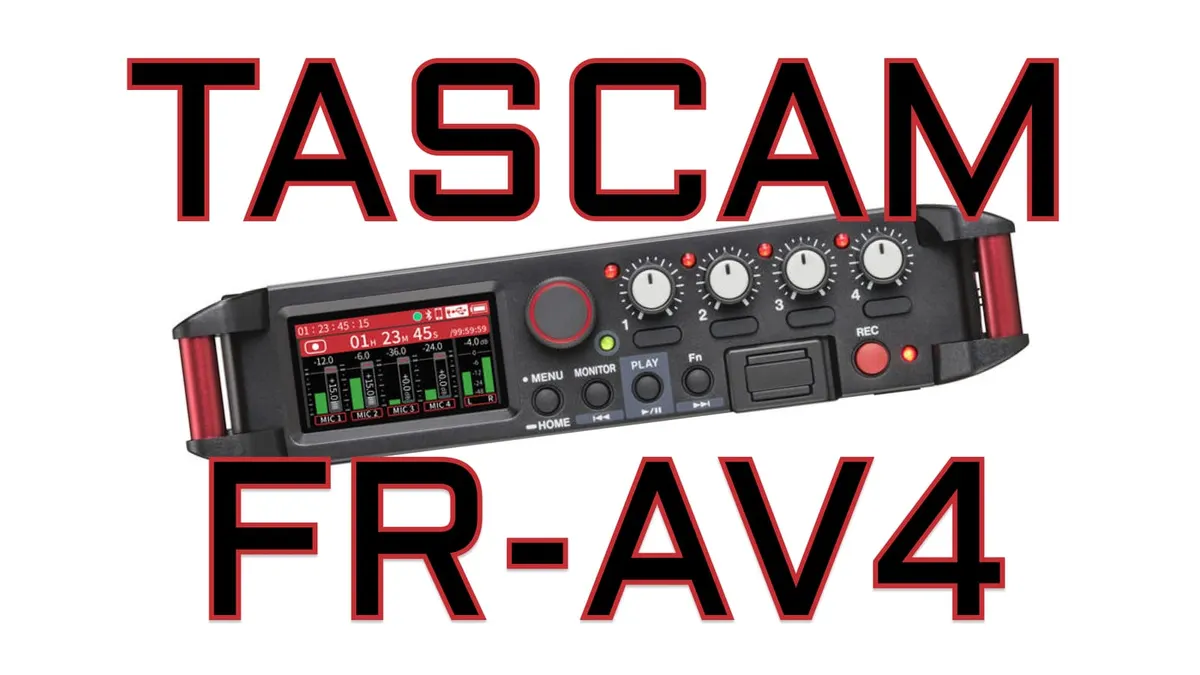
In this week’s video, we take a look at the TASCAM FR-AV4 32-bit float audio field recorder. This recorder is built tough for field use with an all-metal case and formatted for desktop or sound bag use. Some of the features unique to the FR-AV4 include HDMI 2.1 input and output ports that enable you to embed the high quality audio from the recorder into your video recording on recorders like ATOMOS or Blackmagic Design. The FR-AV4 has a built-in timecode generator with 3.5mm input and output ports which enable you to keep your audio and video in sync with almost any timecode generators on the market. And, via the HDMI ports, you can even gang two FR-AV4s together to make an 8 input recording rig.
Gear used or mentioned
The links below are Amazon, B&H Photo, Sweetwater, or other affiliate links. As an affiliate, I earn from qualifying purchases.
- TASCAM FR-AV4 — 32-bit float audio field recorder
- TASCAM FR-AV2 — 32-bit float audio recorder
- TASCAM AK-BT2 bluetooth module which enables wireless monitoring
- ZOOM F6 32-bit — float audio recorder
- Sound Devices MixPre-3 II — 32-bit float audio recorder
Read the transcript
Tascam has a new recorder, the FR-AV4, competing closest with the Sound Devices MixPre and Zoom F6. Does that mean you should upgrade? Let’s take a closer look, comparing audio samples from all three using a Sennheiser MKH50, normalized to -23 LUFS with no other processing.
The FR-AV4 is a 32-bit float field recorder with dual converters per channel and 4 XLR combo inputs. Max input at mic level is +4 dBu, at line level +24 dBu. Dynamic range is 133 dB with equivalent input noise of -127 dBu — very low self-noise, confirmed with my own dummy-XLR resistor test. It has limiters, plus EQ and a noise gate on each channel — a feature not common on competitors. It’s a six-track recorder (4 XLR inputs plus a stereo mix), sample rates up to 192kHz, and closes the file every 20 seconds so you never lose more than 20 seconds if power fails. It has a built-in temperature-compensated timecode generator drifting under one frame per 24 hours between 0-40°C (so timecode drift may increase recording outdoors below freezing).
It has two HDMI 2.1 ports (in/out) supporting 4K60 or 8K30 passthrough and clock-syncing/triggering between linked units, a 3.5mm stereo in/out, and a USB-C port for use as a 32-bit float audio interface (up to 96kHz over USB). Powered by 4 AA batteries, I got an impressive 7 hours 38 minutes using Ikea Ladda 2450mAh rechargeables with phantom power on — far more efficient than a MixPre. It has a bright 1.9-inch touchscreen and an optional AK-BT2 Bluetooth module enabling Atomos UltraSync Blue timecode integration, mobile app control, and wireless Bluetooth headphone monitoring (with some latency) — a feature the MixPre and F6 don’t have. It supports ambisonic recording in A and B formats, has a proper tone generator for camera level calibration, and an adjustable output delay up to 300ms useful for live-streaming sync.
Cons: no auto-mix feature (the Zoom F6 has a basic one built in; the MixPre’s MixAssist add-on is the best of the three but costs extra). The headphone amp is a bit noisy and supplies the least output power of the three, though it did drive my 300-ohm Beyerdynamic DT880 Pros adequately. On price (~$1,000), it sits almost exactly between the MixPre-3 II and MixPre-6 II, and above the ~$700 Zoom F6.
Versus the Zoom F6: the Tascam’s timecode implementation (dedicated 3.5mm ports plus HDMI) is better, ergonomics are subjectively nicer (though the headphone volume encoder is awkwardly on the side), and it has HDMI and per-channel EQ/noise gate that the F6 lacks. The F6 counters with two extra XLR inputs, an NP-F battery sled option, built-in auto-mix, and a $300 lower price.
Versus the MixPre-3 II: the Tascam has separate dedicated timecode in/out ports versus the MixPre’s shared 3.5mm jack, slightly better ergonomics, EQ/noise gate per channel, and wireless Bluetooth monitoring. The MixPre counters with its superior MixAssist auto-mix, alternative NP-F/Hirose cinema-battery sleds, a wider operating temperature range (down to -20°C), and a stronger, better-sounding headphone amp (up to 300mW) — though that comes at the cost of much faster battery drain; I wouldn’t run a MixPre on AA batteries.
Overall there’s no clear winner — all three record excellent, very similar-sounding audio, and the decision comes down to which feature set matches your workflow. Full disclosure, I paid for the MixPre and Zoom F6 myself; the Tascam is on loan and will be shipped back after this review. Get out there and make some great sound, and we’ll talk to you again soon.