
They're not flat — headphones for mixing sound for video
· Audio · Headphones & monitors · 6:41
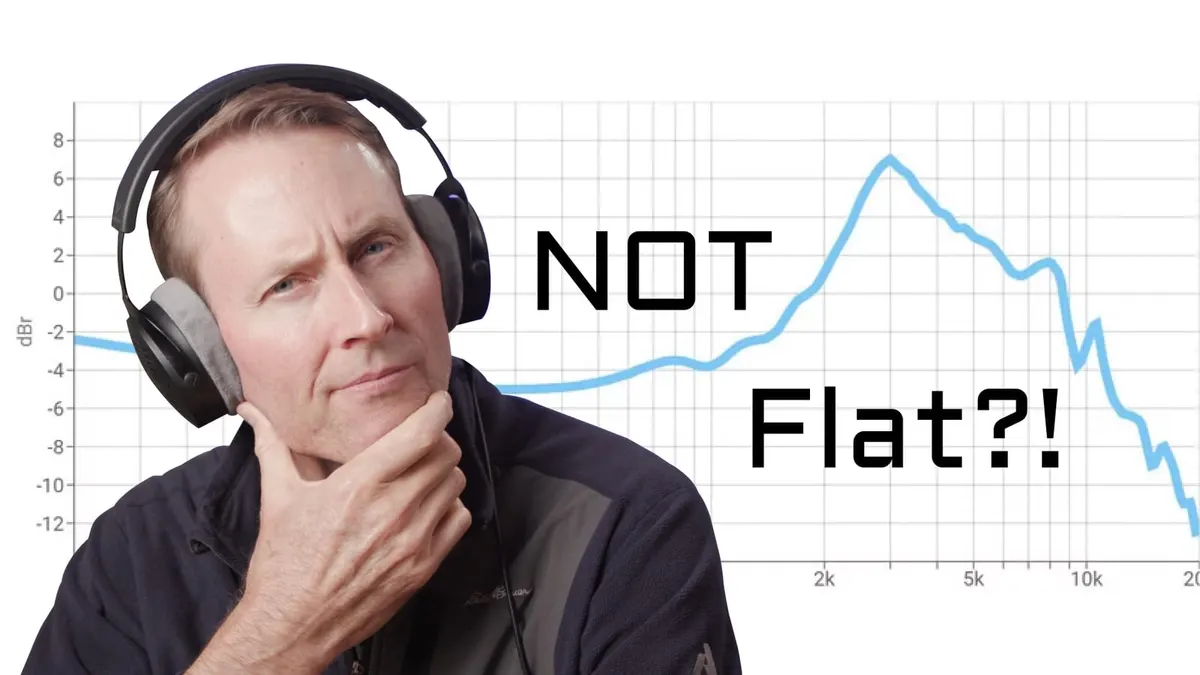
In this week’s video, we explore the Harman Curves — what they are, and why it’s so important in relation to using headphones for audio mixing. Getting a ‘flat’ or neutral frequency response from headphones can be a lot more nuanced than getting a similar response from studio monitors, and there are a variety of factors- both physical and otherwise- that affect the listening experience with each setup. Let’s dive in and find out more about how sound, hardware, and software can come together to create the optimal listening experience!
Gear used or mentioned
The links below are Amazon, B&H Photo, Sweetwater, or other affiliate links. As an affiliate, I earn from qualifying purchases.
- DT700 Pro X — Beyerdynamic Closed-Back Headphones
- DT900 Pro X — Beyerdynamic Open-Back Headphones
Read the transcript
Headphone frequency response is not flat most of the time. Unlike monitors, which are engineered to be as flat as possible, most headphones are actually engineered not to have flat responses. Why isn’t flat ideal in a headphone too? There are some nuances we need to talk about. If you had a pair of headphones with a truly flat response curve, they wouldn’t actually sound flat — it would be a confusing experience.
When you’re listening to reference monitors in a room, the room itself, plus the structure of your head, ears, ear canal, and shoulders, all affect what you eventually hear. So what you’re used to interpreting as “flat” from flat monitors actually isn’t flat at all by the time it reaches your ears. When you listen on headphones, you remove the room and your shoulders from the equation, though your ears and ear canals are still a factor — but it changes things pretty dramatically. So headphones that were purely flat across the frequency spectrum wouldn’t sound the same as monitors in a room.
To remedy this, there’s something called the Harman curve (or curves) — target correction curves designed to replicate for headphone listeners the experience of listening to reference monitors in an acoustically ideal room. Ironically, the Harman curve is quite bumpy, not flat at all, and it’s updated from year to year, since there isn’t one single hard-and-fast version — there’s a lot of subjective preference and differing interpretations of what an “ideal room” sounds like baked into it.
Given all this, how do you choose good headphones for mixing audio for video? Here’s what I look for: first, sound reproduction that doesn’t smear wide frequency ranges together — you want clarity, to be able to distinguish sub-bass from bass from mid-tones without everything becoming one smeared sound. Second, check the impedance and required amplifier wattage, especially if you’re driving them from a laptop headphone jack — lower impedance may be better there. Third, comfort matters since you’ll wear them for extended periods. Fourth, open-back versus closed-back: I personally prefer open-back for mixing since it feels closer to listening to monitors in a room, but closed-back is necessary when recording so your headphone signal doesn’t bleed back into the microphone.
Finally, and maybe most important: spend a lot of hours in your headphones so you learn their characteristics and train your brain to translate what you hear to other playback systems. That’s why generations of engineers have made great mixes on what we’d now consider mediocre headphones. When choosing headphones, check in with multiple reviewers doing the same kind of work you do — audiophile reviewers are optimizing for pleasant listening, which is different from mixing, so if you’re mixing dialogue-heavy audio for video, look for reviewers focused on mixing spoken-word audio specifically. Get out there and listen to some great sound, and we’ll talk to you again soon.