
UHF Wireless Microphone Fundamentals for Video Production — New course!
· Audio · Wireless systems · 2:50
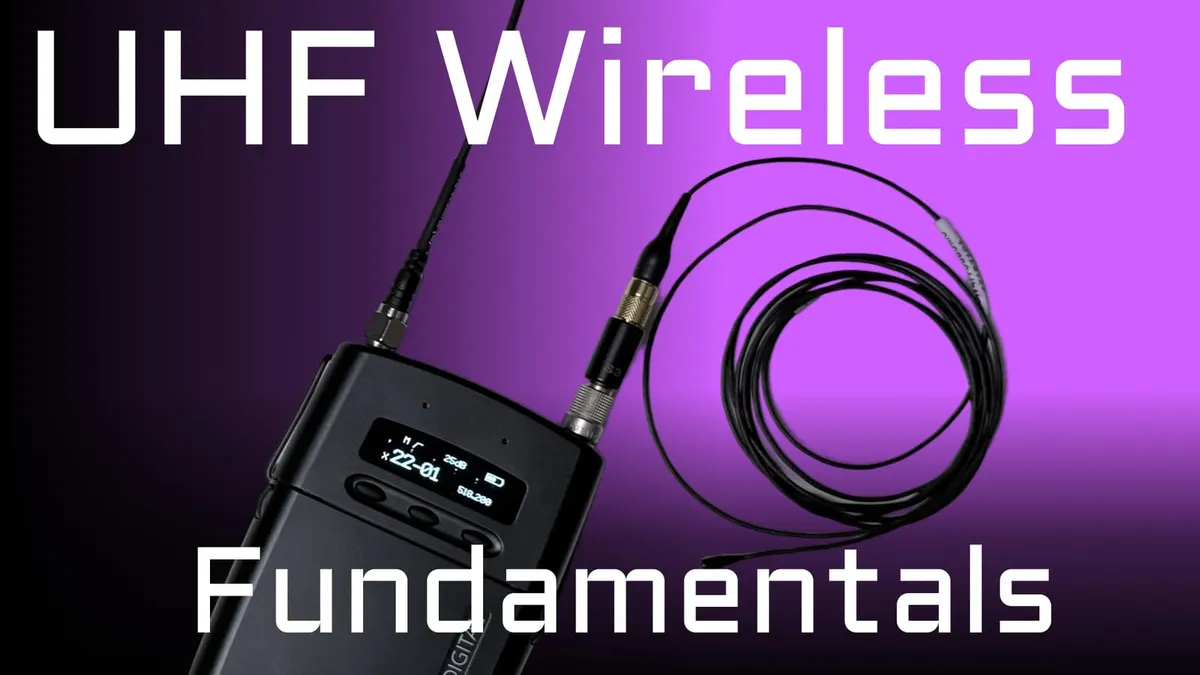
Enroll in the UHF Wireless Microphone Fundamentals for Video course now.
If you’re new to wireless microphones and want to learn how to make great sounding audio for your videos, this course is for you! It’s perfect for small video production companies who need to use wireless microphones for corporate and business videos. It’s also great for those who make low- or no-budget videos or short narrative films for personal enjoyment or film festivals.
But here’s the thing: this course is NOT for
- Music recording or performance. We focus on capturing dialogue, spoken word sound
- People who just want to know which settings to use or want me to just tell you which wireless mic system to buy
- Professionals working on larger budget productions
- If you already know the difference between 2.4GHz and UHF frequencies and the difference between 1/4-wave whip and LPDA antennas, this course is probably too basic for you
In WIRELESS MICROPHONE BASICS, we teach you how wireless mics work so that you can choose the best system for your needs AND how to solve problems when they arise. Because with wireless mics, problems WILL arise. But when you’re done with this course, you’ll confidently put wireless mics to use to create great sound for your videos.
If you run into questions, we hold weekly sound for video sessions. If you’re interested in being notified about these sessions and you want to submit questions, be sure that your email preference is set at the schools so that you receive the emails. I promise, I don’t spam. I just send an email each week letting you know what we’ll cover on the session. And about once a year, I send an email when we launch a new course — very low key, low pressure. And that’s it. I promise.
Read the transcript
If you’re a professional (or aspiring) video or sound-for-video person and you’re not yet familiar with UHF wireless microphone systems, this course is for you. Over the past six years or so, there’s been an explosion of consumer wireless mic systems — Rode Wireless Go/Pro/ME/Micro, DJI Mic 1/2/3, and countless similar products — which are a great fit for creators and even some professional corporate video use, being simple and reliable in straightforward situations.
But in more complex situations — for example, running four channels of wireless microphones at once — these consumer systems tend to hit their limits, and that’s where UHF wireless systems can make a real difference. UHF systems are getting simpler to use, but there’s still important background knowledge and wireless theory to understand.
The course covers the basics of UHF wireless systems, what each component does, how antennas work, how to optimize your operating range, how to hide lavalier microphones and transmitters, how to set up a wireless boom microphone, and how to troubleshoot the problems that inevitably arise. At the end, we cover how to choose the right UHF system for your specific projects — there’s no single best system for every situation, just like there’s no one universal best car for everyone.
This isn’t just pre-recorded videos — we also hold weekly sound-for-video sessions where you can submit questions ahead of time and get them answered live, plus a community of experienced members who often jump in with insights I might not have. There’s also a Discord server for ongoing discussion, linked from our latest sound-for-video session. If this sounds useful, we’d love to have you join. In the meantime, get out there and make some great sound.