
ZOOM H5studio Review
· Audio · Recorders · 13:14
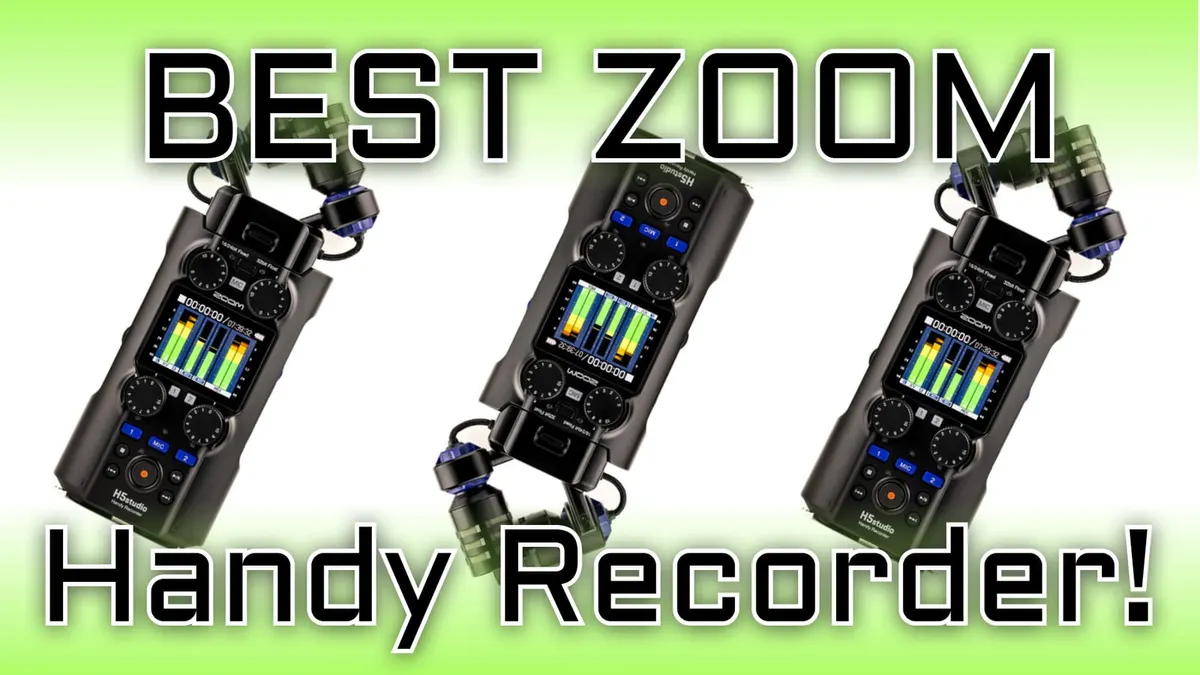
In this review, we look at the ZOOM H5studio which is a portable audio recorder with large (19.4 mm) microphones spec’d at 140 dB max SPL, F-series preamps with 132 dB dynamic range, and 32-bit float recording. It offers six recording tracks — 4 inputs plus a stereo mix — with sample rates up to 192 kHz, advanced limiters that ‘look ahead’ to predict and prevent clipping, and wireless timecode capabilities. The H5studio is designed for professional audio production and includes features like a full-color LCD screen and headphone output, and RF shielding. It can also be used as a USB audio interface. Priced at $370 USD.
Gear used or mentioned
The links below are Amazon, B&H Photo, Sweetwater, or other affiliate links. As an affiliate, I earn from qualifying purchases.
- ZOOM H5studio — 32-bit float audio recorder
Common questions
Is the H5studio's 60 dB of gain real preamp gain?
No, and this matters. It's digital gain applied after conversion, not analog preamp gain — more like adjusting levels on a file you've already recorded.
How long does the Zoom H5studio run on AA batteries?
Over 12.5 hours in my testing with Ikea Ladda NiMH rechargeables, and it still had battery left — likely closer to 14 hours. Expect less if you're phantom-powering an external mic. USB-C power works too.
Does the H5studio have handling noise when recording with the built-in mics?
Yes. Adjusting the gain knobs or touching the body during recording is audible, despite the shock-mounted built-in mics. The shock mounts help but don't fully isolate it. Dial your settings in beforehand and keep a firm, still grip — same as every Zoom handy recorder so far.
Read the transcript
This entire episode is recorded with the Zoom H5 Studio’s built-in microphones, normalized to -23 LUFS with no other processing. It’s a six-track recorder (4 inputs plus a stereo mix simultaneously), 32-bit float up to 192kHz, with new built-in microphones substantially larger than any previous Zoom handy recorder — and to my ear, the best-sounding built-in mics of any Zoom H-series recorder I’ve used. They handle up to 140 dB SPL max, fixed in an XY pattern at 90°. The two XLR/quarter-inch combo inputs supply phantom power, and the preamps are evidently the same Zoom F-series design, noticeably cleaner than any previous Zoom handy recorder. Gain can go up to 60dB, but importantly this is digital (post-conversion) gain, not analog preamp gain — more like adjusting levels on an already-downloaded file.
Other features: digital look-ahead limiters, a new, nicer 2-inch screen with a voiceover accessibility mode that reads out menu settings, wireless timecode compatibility via an optional TCA1 module (untested here), a BT1 module for app control, a 3.5mm line output for feeding a camera, and a 3.5mm mic input with 2.5V plug-in power (a Sanken COS-11D spec’d for 5V worked but I can’t confirm there’s no long-term risk to the mic). It has a 20mW headphone output and runs on 4 AA batteries — in testing with Ikea Ladda NiMH rechargeables, over 12.5 hours with battery to spare (likely closer to 14 hours), less if phantom-powering an external mic; USB-C power is also supported. No accessories are included in the box (no cable, no windscreen) — those come in a separate accessory pack.
It uses a new “3.0” microphone capsule system, with more capsule modules coming (a stereo shotgun, an XLR-input module, and later a wireless receiver module for Zoom’s own wireless system). It can also work as a 4-in/2-out USB audio interface while recording simultaneously, sending 32-bit float, 24-bit, or 16-bit as needed. Self-noise is spec’d at -127 dBu(A), matching the Zoom F-series.
Build quality: plastic, but a different, higher-quality-feeling plastic than the Essential series that doesn’t get sticky over time, though the battery door is a bit loose/rattly (a recurring Zoom weak point). RF shielding held up well in testing near a UHF transmitter and a phone streaming over Wi-Fi, with no digital interference. The recorder appears to skip a discrete analog preamp stage entirely, per its manual’s block diagram, feeding XLR inputs straight into converters — consistent with Zoom’s general philosophy of doing things digitally wherever possible (their limiters, for instance, are digital, not analog). A deliberate overload test with a Sanken COS-11D confirmed audio pushed above 0dB could be recovered cleanly in post. It’s unclear whether the 3.5mm mic input uses multiple converters like the XLR inputs, or just a single converter as on some older Essential-series units, so it may clip a bit more easily.
A practical (not scientific) self-noise sample in a very quiet, blanket-treated room, boosted to -23 LUFS, measured -67 dB RMS max on the silent portion — good performance, clearly better than the noisier Zoom H4 Essential. Handling noise is still present when adjusting gain knobs or touching the body during recording, despite the built-in shock-mounted microphones — the shock mounts help somewhat but don’t fully isolate handling noise, so a firm, still grip with settings dialed in beforehand is still recommended, as with every Zoom handy recorder to date.
Compared to the Tascam Portacapture: built-in mic quality and battery life are both noticeably better on the H5 Studio, making it my preferred handy-style recorder overall of the two, though the Portacapture remains a good fit for other users’ needs. Get out there and make some great sound, and we’ll talk to you again soon.